China has become a major manufacturing base for the global automotive supply chain. The scale is difficult to ignore.
The International Organization of Motor Vehicle Manufacturers reported 31.28 million vehicles produced in China during 2024. This output creates deep capabilities in stamping, casting, electronics, rubber components, and precision machining. It also creates noise. Many suppliers look impressive online, but their real factory capacity may be less clear.
This guide examines the best Automotive Spare Parts manufacturers in China through practical purchasing criteria. These criteria include product quality, engineering experience, certification, production control, export performance, and after-sales support. IATF 16949 certification can indicate stronger automotive quality systems, although certification alone cannot guarantee dependable products. Buyers should still review audit records, inspection plans, PPAP documentation, and batch traceability.
The China Association of Automobile Manufacturers reported more than 31 million vehicle sales in China during 2024. That domestic demand supports a broad supplier ecosystem and faster product development. However, large production volume does not automatically mean consistent aftermarket quality. A factory may produce excellent samples and weaker replacement batches. That risk deserves attention.
We will compare manufacturers by component specialization, manufacturing equipment, testing capability, customization experience, and international communication. Evidence matters more than polished brochures. Factory videos help, but independent inspections and sample testing provide stronger confidence. The following overview is not a perfect ranking. Supplier suitability depends on your vehicle models, target market, compliance requirements, order quantity, and warranty expectations. Even experienced buyers can miss small warning signs. This guide aims to make those signs easier to see.
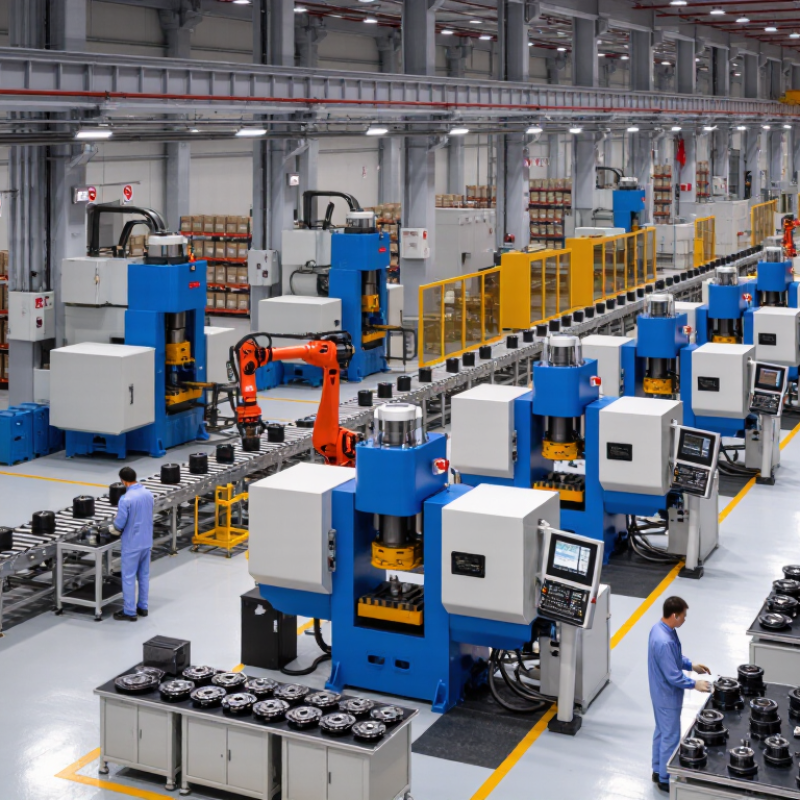
A top automotive spare parts manufacturer in China is defined by process control, not impressive photographs. During supplier visits, buyers should inspect machining areas, storage racks, and final inspection stations. Clean floors help, but documented discipline matters more. Each production batch should carry a traceable code, linked to materials, operators, and inspection records. This detail becomes valuable when a shipment shows uneven dimensions or premature wear.
Engineering capability separates a dependable factory from a simple trading office. Experienced manufacturers read technical drawings carefully and question unclear tolerances before production begins. They use calibrated gauges, hardness testers, and fatigue equipment where necessary. Sample parts should be measured against approved specifications, not visual expectations. Small deviations matter. A brake component, steering joint, or suspension bushing can affect vehicle control.
Communication is another practical test. A reliable supplier reports delays early, explains corrective actions, and keeps revision records. It should also provide consistent packaging that prevents rust, scratches, and mixed part numbers during transport. Certifications can support credibility, but certificates alone prove little without current audits and test results. No factory is flawless. I have seen capable suppliers overlook minor labeling errors while meeting strict dimensional requirements. That weakness deserves correction, not concealment. Regular process reviews, transparent quality data, and realistic production promises define a manufacturer worth evaluating.

A strong automotive spare parts manufacturer operates in a large and expanding vehicle market, supports new-energy vehicle production, and demonstrates export capability. These industry indicators provide useful context when evaluating manufacturing scale, technology readiness, and international supply-chain capacity.
Unit: million vehicles. Data source: China Association of Automobile Manufacturers (CAAM), annual automotive production and export statistics for 2020–2023.
Best Automotive Spare Parts Manufacturers in China?
Key Automotive Spare Parts Manufacturing Regions and Industry Clusters
China’s strongest spare-parts capabilities are concentrated around vehicle and component clusters. They are not evenly distributed nationwide. The China Association of Automobile Manufacturers reported 30.16 million vehicles produced in 2023. This scale supports deep supplier networks, skilled technicians, and mature tooling services.
The Yangtze River Delta, including Jiangsu, Zhejiang, and Anhui, is known for precision machining, braking components, electronics, and rubber products. The Pearl River Delta has strong capabilities in sensors, wiring systems, lighting, and die casting. The Bohai Rim remains important for metal forming, engines, and commercial-vehicle components. Central China adds assembly capacity and growing logistics advantages.
Regional labels help, but they can mislead. A factory near a famous cluster may still lack stable process control. Buyers should examine IATF 16949 certification, incoming-material records, inspection equipment, and batch traceability. PPAP files and endurance-test results deserve careful review. These details often reveal more than a polished showroom.
China Customs trade data also shows the country’s substantial automotive-parts export base, but export volume does not guarantee consistent quality. Request samples from different production lots. Check dimensional reports, surface treatment, packaging strength, and replacement rates. Small suppliers may offer flexibility, yet their documentation can be incomplete. That weakness should not be ignored.
China’s automotive spare parts industry is strongest when manufacturers specialize by category. Engine component makers often focus on pistons, valves, gaskets, and timing systems. Their quality depends on alloy control, machining accuracy, and heat-treatment records. A reliable supplier should provide material certificates and measured tolerances.
Brake and suspension manufacturers serve another major segment. They produce brake pads, discs, shock absorbers, control arms, and bushings. Look for stable friction testing, corrosion protection, and endurance results. Warehouse photos are not enough. Ask for batch identification and inspection reports. Small details matter.
Electrical parts require different expertise. Chinese factories producing sensors, lighting units, starters, and wiring assemblies should demonstrate circuit testing and moisture resistance. For body parts, stamping accuracy and surface preparation deserve attention. Poor alignment can create costly fitting problems. I have found that sample approval is often more useful than impressive factory presentations. No supplier is perfect. Some documents may be incomplete, and communication can expose weaknesses early. Buyers should compare production capacity, tooling ownership, quality systems, and after-sales response. A lower price may hide thinner coatings or inconsistent rubber compounds. Rechecking assumptions is necessary, even after a successful trial order.
Choosing the best automotive spare parts manufacturer in China requires more than comparing prices. Quality begins with a documented management system. ISO 9001 supports process control, while IATF 16949 addresses automotive-specific risk and traceability. Environmental systems, such as ISO 14001, also show disciplined factory management. Certifications matter. Their scope and validity must be checked.
A capable plant should control materials from incoming inspection to final packing. Look for spectrometers, coordinate measuring machines, automated testing, and calibrated gauges. CNC machining, stamping, forging, molding, and assembly lines reveal production depth. Statistical process control can identify size drift before parts leave the factory. PPAP documents, control plans, and batch records strengthen reliability.
Production capacity is not only about machine numbers. It includes skilled operators, maintenance routines, backup tooling, and realistic delivery planning. During a factory audit, inspect clean work areas, labeled bins, and actual production records. Small defects spread. A certificate alone cannot guarantee consistent parts, especially when subcontracting is hidden. This is where careful questioning becomes essential.
Some manufacturers offer impressive samples but struggle with repeat orders. That gap deserves attention. A stronger supplier welcomes independent inspections, shares test data, and explains corrective actions clearly. Still, no production system is perfect. Even experienced factories can miss a coating flaw or packaging weakness. Continuous review, retained samples, and field feedback help expose those problems before they become expensive.
| Evaluation Dimension | Recommended Industry Requirement | Relevant Standard or Certification | Typical Evidence to Request | Typical Production Capability |
|---|---|---|---|---|
| Quality Management System | Documented quality procedures covering design, purchasing, manufacturing, inspection, traceability, and corrective action. | ISO 9001:2015; IATF 16949 for suppliers serving automotive original-equipment or structured automotive supply chains. | Valid certificate, certification scope, recent surveillance-audit status, process flowcharts, and corrective-action records. | Controlled production and inspection procedures with batch-level documentation. |
| Automotive Process Control | Use of risk-based planning and automotive core tools for parts with safety, performance, or fitment implications. | APQP, PPAP, FMEA, MSA, SPC, and control-plan methodology. | Process FMEA, control plan, capability studies, PPAP package, gauge R&R results, and inspection standards. | Repeatable production with defined critical-to-quality characteristics and reaction plans. |
| Material Traceability | Traceability from incoming raw material through production lot, inspection result, packaging, and shipment. | ISO 9001 or IATF 16949 traceability requirements; material-specific specifications such as EN, ASTM, SAE, or GB standards. | Mill certificates, heat or batch numbers, supplier records, barcode systems, and retention-policy documentation. | Lot identification commonly maintained throughout the manufacturing and logistics process. |
| Machining and Dimensional Accuracy | CNC turning, milling, grinding, broaching, balancing, and automated measurement where product geometry requires it. | ISO 2768 where applicable; customer drawings and product-specific tolerances remain controlling requirements. | Machine list, calibration certificates, capability reports, CMM reports, first-article inspection, and sample measurement records. | CNC production, in-process gauging, coordinate measurement, and dedicated checking fixtures. |
| Casting, Forging, and Stamping | Controlled tooling, temperature, pressure, forming parameters, heat treatment, and post-process inspection. | Applicable GB, ISO, ASTM, SAE, EN, or customer-specific material and process specifications. | Tooling records, hardness results, metallurgical reports, dimensional inspection, non-destructive testing, and process-parameter logs. | In-house or controlled external processes for aluminum, iron, steel, and other automotive-grade materials. |
| Brake and Safety-Critical Components | Enhanced validation, friction or fatigue testing, dimensional control, and strict change management. | ECE R90 for applicable replacement brake components; additional national or customer requirements may apply. | Type-approval documentation where required, test reports, friction data, batch records, and product-change notifications. | Controlled manufacturing of brake pads, discs, drums, hydraulic components, and related assemblies, subject to product scope. |
| Rubber, Plastic, and Sealing Products | Stable compound formulation, mold control, dimensional inspection, aging resistance, and leak or pressure testing. | ISO 1629 for rubber nomenclature; ISO 1817 for rubber-fluid effects; product-specific ISO, SAE, or customer specifications. | Material declarations, hardness results, tensile and elongation data, compression-set results, aging tests, and mold-validation records. | Compression molding, injection molding, extrusion, vulcanization, trimming, and automated visual inspection. |
| Electrical and Electronic Parts | Electrical performance, environmental durability, connector integrity, electromagnetic compatibility, and end-of-line testing. | ISO 16750 for road-vehicle environmental conditions; CISPR 25 and ISO 11452 may apply to electromagnetic compatibility testing. | Electrical test records, environmental test reports, software or firmware controls where relevant, and component traceability. | Automated assembly, functional testing, environmental screening, and end-of-line inspection for applicable products. |
| Environmental Management | Controls for energy, waste, emissions, hazardous substances, wastewater, and environmental compliance. | ISO 14001:2015; RoHS and REACH requirements where applicable to the supplied product and destination market. | Environmental certificate, restricted-substance declarations, material-composition data, waste records, and audit reports. | Documented environmental controls and supplier-management procedures for regulated materials. |
| Testing and Laboratory Resources | Testing must reflect the product’s failure modes, operating environment, legal requirements, and customer specifications. | ISO/IEC 17025 is relevant when laboratory competence and accredited testing are required. | Equipment inventory, calibration status, test methods, sample reports, laboratory scope, and external-lab qualifications. | Dimensional, material, hardness, endurance, pressure, vibration, temperature, corrosion, and functional testing as applicable. |
| Production Scale and Delivery | Capacity should be verified against forecast demand, tooling requirements, minimum order quantities, lead time, and peak-season needs. | ISO 9001 or IATF 16949 controls for production planning, supplier management, and delivery performance. | Capacity analysis, monthly output data, on-time-delivery history, inventory policy, contingency plan, and production-schedule samples. | Scalable production ranging from prototype and small-batch orders to high-volume repeat programs, depending on facility resources. |
| Packaging and Export Readiness | Packaging must prevent corrosion, deformation, contamination, mixed lots, and identification errors during international transport. | Destination-market labeling rules; ISPM 15 for regulated solid-wood packaging where applicable. | Packaging specifications, barcode or lot-label samples, drop-test records where relevant, export documents, and pallet-treatment records. | Export packing, carton and pallet control, multilingual documentation, and shipment-level traceability. |
Note: Certification and regulatory requirements depend on the specific spare-part category, destination market, vehicle application, and customer specification. All certificates should be verified against the issuing body and the exact manufacturing scope.
Selecting a Chinese automotive spare parts manufacturer requires more than comparing quotations. Start with the part’s drawings, material grade, dimensions, and performance requirements. Ask for inspection reports, test methods, and production records. Vague answers deserve caution.
Request samples from the same production line used for future orders. Check surface finish, machining marks, packaging, and fitment against approved specifications.
A factory audit can reveal storage conditions, calibration labels, and worker procedures. Look for batch numbers and clear traceability. Confirm whether quality checks occur during production, not only before shipment.
Communication also matters. A dependable supplier explains tolerances, tooling limits, lead times, and possible design risks. Review applicable safety and trade requirements independently, rather than trusting a certificate image. Contact existing customers when possible. Their experience may expose delays or inconsistent batches.
Do not rely on a polished showroom. I once overlooked a small documentation gap, and it created unnecessary rechecking later. That mistake changed my evaluation process. Now, I compare sample results with written specifications and record every agreed change. Price still matters, but unstable quality can cost far more through returns, installation delays, and damaged trust. A trial order with defined acceptance criteria provides useful evidence before larger purchasing commitments.