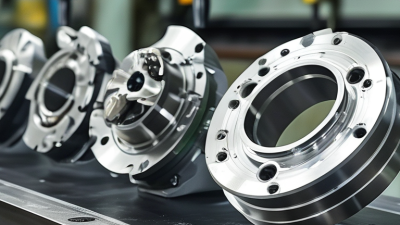
Choosing Metal Fabrication Parts suppliers means looking beyond a polished website and a competitive quotation. A bracket with misplaced holes can stop an assembly line. An inconsistent weld can trigger expensive rework. Details matter. For global buyers, supplier selection connects manufacturing quality with delivery reliability, documentation, and landed cost. Deloitte’s 2024 Manufacturing Industry Outlook reports that 86% of surveyed manufacturing executives expect smart factory solutions to drive competitiveness. However, equipment investments alone cannot establish whether a supplier can repeatedly meet your specifications.
Manufacturing quality expert W. Edwards Deming warned, “A bad system will beat a good person every time.” His observation applies directly to sourcing Metal Fabrication Parts across borders. Ask how suppliers control drawing revisions, verify material grades, and record inspection results. Check the evidence. For laser-cut stainless steel panels, request dimensional reports and confirmation of the specified surface finish. For welded assemblies, examine fixture control, weld consistency, and distortion management. An ISO 9001 certificate supports evaluation, but its scope and validity still require verification.
The International Federation of Robotics’ World Robotics 2024 report recorded 541,302 industrial robot installations worldwide during 2023. That scale highlights manufacturing’s investment in automation, although automation does not guarantee a suitable sourcing partner. Price needs context. A cheaper component may cost more after freight, finishing corrections, or rejected batches. This guide approaches the 10 best suppliers through practical purchasing criteria: capabilities, quality controls, communication, and export readiness. “Best” remains imperfect; a strong prototype supplier may struggle with recurring production volumes. Buyers should validate shortlisted suppliers through sample orders and documented acceptance criteria before committing to larger contracts.
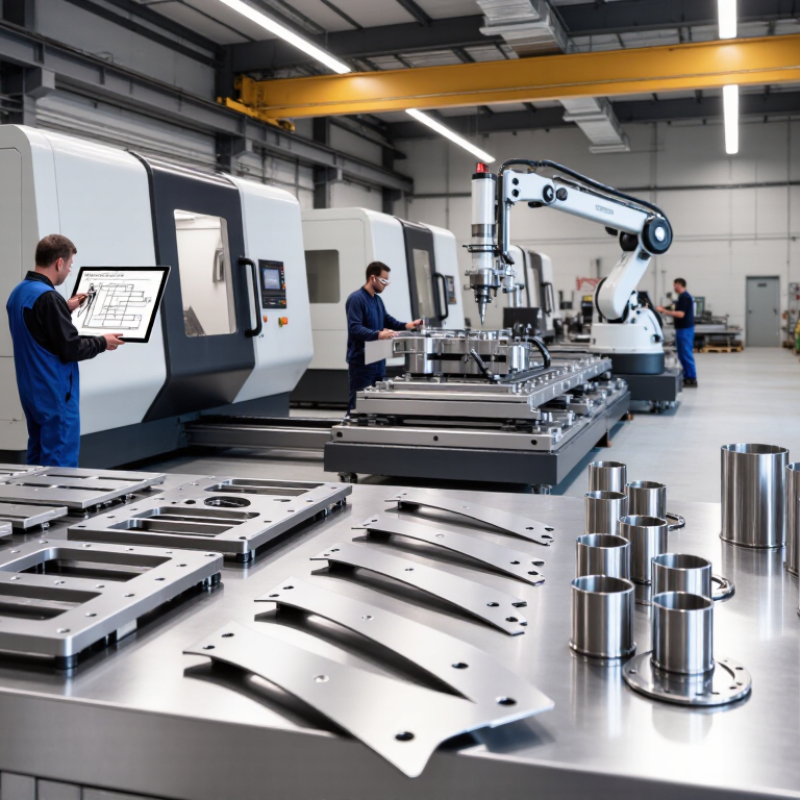
include mounting brackets, equipment enclosures, machine frames, panels, and custom assemblies.
A folded bracket supports a load, while an enclosure protects electrical components from dust and accidental contact.
Thickness matters.
A 2 mm sheet can suit a small cover, but load-bearing brackets require calculations based on geometry and service conditions.
Buyers should specify dimensions, hole positions, bend angles, and acceptable tolerances before requesting quotations. A drawing with unclear bend references can produce parts that measure correctly yet fit poorly.
affects strength, corrosion resistance, weight, and manufacturing cost.
Mild steel offers economical strength, although exposed surfaces often need paint, powder coating, or another protective finish.
Stainless steel 304 suits many indoor and general industrial applications, but chloride exposure may require a different grade.
Aluminum 5052 bends well for sheet metal housings, while 6061 is commonly chosen for machined components.
Trade-offs remain. Choosing thicker material may reduce deflection, yet it adds weight and can complicate forming without addressing weak joint design.
creates profiles and holes, press brakes form bends, and welding joins separate pieces into assemblies.
CNC machining adds precise bores, threads, or mating surfaces where cutting and bending cannot meet functional requirements. Welding can distort thin panels, so fixture design and the welding sequence deserve attention.
For global sourcing, compare suppliers using sample parts, inspection records, material certificates, and clearly documented finish requirements.
A good-looking sample is useful, but it cannot establish consistency across an entire production batch. Ask how critical dimensions are checked and how drawing revisions reach the production floor.
Evaluating metal fabrication parts suppliers starts with evidence of capability, not a broad equipment list. Ask whether their cutting, bending, welding, and finishing processes match your drawings and expected production volumes. For a 2 mm stainless steel bracket, specify hole positions, bend angles, surface finish, and acceptable burr levels before requesting quotations. Request inspection records. A useful sample report links measured dimensions to drawing revisions and identifies the instruments used. A supplier should also explain how it controls distortion during welding, particularly when several joined components must fit together without adjustment.
Quality certificates deserve attention, but their scope and validity matter more than a logo displayed on a website. Check material traceability through mill certificates and batch identification. Ask for details of how the supplier handled a rejected batch, including containment, root cause analysis, and corrective action. Samples have limits. One excellent prototype does not prove consistent production quality. Where practical, use a small trial order to assess repeatability, packaging quality, and the supplier’s response when measurements approach tolerance limits.
Commercial evaluation should include tooling charges, inspection costs, payment terms, and responsibility for shipping damage. Compare quotations against the same drawing revision and delivery terms. A low unit price can lose its advantage when export packaging, freight, duties, or replacement shipments enter the calculation. Lead-time promises also need scrutiny. Ask whether quoted schedules include material procurement, outside finishing, inspection, and packing, especially when production depends on subcontractors. These checks still leave uncertainty; a trial order offers limited evidence of performance during peak demand.
Finding the 10 best metal fabrication parts suppliers starts with your drawings, production volume, and delivery requirements. A useful shortlist spans laser cutting, sheet metal bending, CNC machining, welding, stamping, casting, forging, extrusion, finishing, and assembly. These are supplier categories, not verified rankings. One factory may cover several processes, but subcontracted work deserves closer inspection. Ask who controls each operation. For a 2 mm stainless steel bracket, specify the material grade, bend radius, hole tolerances, and surface finish.
Check the evidence. Request material certificates, dimensional inspection reports, and photographs of comparable parts. An ISO 9001 certificate supports quality-system checks, but it does not prove that your parts will meet specifications. Verify its scope and validity. Approve samples before production. A sample order can reveal burrs, distorted welds, or coating damage that quotation sheets never show. Even then, a good sample may not represent an entire batch; agree on production inspection criteria.
Global buyers should compare landed costs, including tooling, packaging, freight, duties, and inspection fees. Confirm the Incoterms rule, named location, quotation currency, and responsibility for rejected parts. Request packaging details, such as dividers between finished surfaces and reinforced cartons for heavy components. Lower prices deserve attention, although my shortlist would give greater weight to repeatability. That preference can overlook capable smaller workshops, so leave room for a controlled trial order.
Comparing ten metal fabrication parts suppliers starts with matching their capabilities to your drawings. A laser cutting specialist may handle flat brackets efficiently but outsource machining for threaded holes. An integrated shop may combine cutting, bending, welding, and finishing, reducing handoffs between subcontractors. Ask for evidence. For a 2 mm stainless steel enclosure, request bend tolerances, weld samples, and inspection records. Confirm whether quoted tolerances apply before or after powder coating, since coating thickness can affect mating features.
Certifications need closer reading than a badge on a website. Check that each certificate covers the production site and relevant manufacturing activities. ISO 9001 indicates a quality management system; it does not guarantee every part meets your drawing. For welded assemblies, request applicable welder qualifications and documented inspection procedures. Material certificates should connect delivered parts to identifiable material batches. A polished sample looks reassuring, but it reveals little about consistency across 500 pieces.
Compare lead times using identical quantities, materials, finishes, and delivery terms. Separate prototype production, tooling, finishing, inspection, and shipping in every quotation. Dates need context. Ask whether production starts after payment, drawing approval, or material arrival. A shorter promise may exclude outsourced coating or export packing. Request estimated delivery windows for both initial orders and repeat batches. There is an uncomfortable tradeoff here: requiring extensive documentation on simple brackets can increase cost without proportionate value. Buyers should define acceptance criteria carefully, then question whether each requested check addresses a realistic failure.
Important: The entries below are anonymized supplier profiles, not named or independently verified companies. Capabilities describe common service categories in the metal-fabrication market; certification standards are examples buyers may request and must verify directly with each supplier. Lead times are indicative planning ranges for standard projects after drawing approval and material availability, not guaranteed quotes.
| Profile | Typical Capabilities | Common Materials | Certification Standards to Verify | Indicative Lead Time | Best-Fit Projects |
|---|---|---|---|---|---|
| Supplier 01 | Laser cutting, CNC punching, bending, welding, and powder coating | Carbon steel, stainless steel, aluminum | ISO 9001; ISO 14001 where environmental management is required | Prototype: 1–3 weeks; production: 3–6 weeks | Enclosures, brackets, panels, and general sheet-metal parts |
| Supplier 02 | Precision sheet-metal fabrication, CNC machining, and assembly | Aluminum, stainless steel, carbon steel | ISO 9001; verify documented inspection and traceability requirements | Prototype: 2–4 weeks; production: 4–8 weeks | Low- to medium-volume equipment and machine components |
| Supplier 03 | Heavy plate cutting, rolling, structural welding, and stress relief | Carbon steel plate, alloy steel, stainless steel | ISO 9001; welding qualifications and procedures relevant to the project | Prototype: 3–6 weeks; production: 6–12 weeks | Frames, tanks, industrial structures, and large welded assemblies |
| Supplier 04 | Tube and pipe laser cutting, bending, welding, and end forming | Carbon steel, stainless steel, aluminum | ISO 9001; applicable welding qualifications and material traceability | Prototype: 2–4 weeks; production: 4–8 weeks | Chassis, handrails, furniture frames, and tubular assemblies |
| Supplier 05 | High-mix CNC machining, sheet-metal work, and custom finishing | Aluminum, stainless steel, carbon steel, copper alloys | ISO 9001; AS9100 only if applicable and confirmed for the required scope | Prototype: 2–5 weeks; production: 4–9 weeks | Complex custom parts and projects combining machined and formed components |
| Supplier 06 | Automotive stamping, progressive die work, welding, and subassembly | Cold-rolled steel, stainless steel, aluminum | IATF 16949 where automotive supply-chain qualification is required; ISO 9001 | Prototype: 4–8 weeks; production: 8–16 weeks | Repeat production parts with tooling and volume requirements |
| Supplier 07 | Aluminum fabrication, extrusion processing, CNC machining, and finishing | Aluminum sheet, plate, and extrusions | ISO 9001; verify coating or anodizing process controls if specified | Prototype: 2–4 weeks; production: 4–8 weeks | Lightweight frames, heat sinks, equipment housings, and transport components |
| Supplier 08 | Stainless-steel fabrication, sanitary welding, polishing, and passivation | Stainless steel grades selected for the application | ISO 9001; project-specific hygienic, weld, and surface-finish requirements | Prototype: 3–5 weeks; production: 5–10 weeks | Food-processing, pharmaceutical, and corrosion-resistant equipment |
| Supplier 09 | Wire forming, metal stamping, spot welding, and small-part assembly | Spring steel, stainless steel, carbon steel, copper alloys | ISO 9001; verify measurement systems and lot-control processes | Prototype: 2–5 weeks; production: 5–10 weeks | Clips, brackets, springs, contacts, and other small components |
| Supplier 10 | Large-format cutting, robotic welding, machining, and project-based assembly | Carbon steel, alloy steel, stainless steel | ISO 9001; applicable welding qualifications, inspection, and traceability records | Prototype: 4–8 weeks; production: 8–16 weeks | Large industrial equipment, custom machinery, and engineered assemblies |
Comparing metal fabrication suppliers starts with a quotation package that leaves little room for guessing. Send revision-controlled drawings, material grades, quantities, surface finishes, and delivery requirements. For a laser-cut bracket, specify thickness, hole diameters, bend angles, and acceptable burrs. Request separate prices for tooling, samples, production, packaging, and freight. Check the exclusions. A cheaper quote may omit deburring or protective wrapping, making the apparent saving disappear before shipment.
Quality checks should match the part’s function and the consequences of failure. A mounting hole might require a ±0.10 mm tolerance, while a cosmetic edge could allow more variation. Confirm this with engineering. Ask for a sample inspection report showing measured results against drawing dimensions. Material certificates should identify the specified grade and connect to the supplied batch. Photographs help reveal scratches and packaging defects, but cannot establish dimensional accuracy. Samples have limits. An approved prototype does not guarantee that every production batch will match it. Agree on sampling methods, defect criteria, and corrective actions before production begins.
Shipping arrangements deserve the same attention as fabrication details. Confirm who handles export clearance, insurance, import duties, and unloading at the destination. Request carton dimensions, gross weight, and packaging photographs before booking freight. Use separators between finished parts and suitable moisture protection when transit conditions require it. Tight deadlines can tempt buyers to approve packing from photographs alone. That shortcut deserves scrutiny, especially for thin panels that bend easily. Ask how damage will be documented and when replacement costs become the supplier’s responsibility.
When comparing metal fabrication suppliers, include shipping requirements in your quotation and quality checks. This chart compares standard external container dimensions that help buyers plan international shipments.
A 40-foot container provides approximately twice the external length of a 20-foot container. A 40-foot high-cube container adds 0.305 meters of external height compared with a standard-height container. For fabricated metal parts, confirm internal dimensions, door clearance, payload limits, and weight distribution before booking. External dimensions alone do not determine usable cargo space or permitted cargo weight.
Source: ISO 668:2020 — Series 1 freight containers: Classification, dimensions and ratings . Values are standardized external dimensions, expressed in meters.