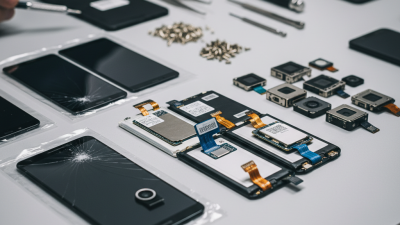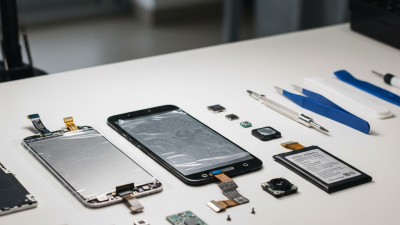
Finding the best China suppliers for Phone Parts Europe requires more than comparing catalog prices. European wholesalers need consistent quality, clear documentation, and dependable communication. A low quotation may hide weak packaging, unstable components, or delayed production. This guide examines suppliers through practical purchasing criteria, not promotional claims.
Experienced buyers usually check screens, batteries, charging ports, cameras, and small repair components before placing large orders. Sample testing can reveal color differences, touch sensitivity problems, poor adhesive, or inaccurate product descriptions. Ask for batch records, warranty terms, inspection procedures, and realistic lead times. Small details matter.
Compliance matters too. Suppliers serving Europe should support relevant product documentation, including safety and chemical requirements where applicable. Battery shipments may require additional transport paperwork and careful packaging. Responsible suppliers should explain their traceability process without avoiding difficult questions. That builds trust.
Still, no supplier is perfect. Even a respected factory can face material shortages or inspection failures. That is worth admitting. Buyers should compare response speed, replacement policies, export experience, and after-sales support. Independent samples and written agreements reduce avoidable risks. They also create evidence when expectations differ.
This overview will help importers compare China’s leading phone parts wholesalers for European business. It focuses on practical reliability, technical knowledge, and long-term value. The strongest choice is not always the cheapest one. Sometimes, paying slightly more prevents expensive returns, customer complaints, and interrupted repairs.

China has become a major source for Europe’s phone parts wholesale market. Its strength comes from dense manufacturing networks, flexible production, and broad component availability. Buyers can often find screens, charging ports, batteries, cameras, and small repair tools through one sourcing channel. This reduces purchasing time, but low prices alone should not decide a supplier.
Quality needs evidence. A reliable wholesaler should provide clear specifications, sample units, batch records, and warranty terms. Buyers can compare screen brightness, connector alignment, battery capacity, and packaging before placing larger orders. A simple incoming inspection can reveal color differences, loose fittings, or unstable charging. Small details matter.
Documentation matters too. European importers should check applicable product safety, chemical, recycling, labeling, and transport requirements. Batteries need careful handling and suitable shipping documents. Experienced suppliers usually explain lead times, customs paperwork, and replacement procedures without vague promises. Communication can still fail. Time zones, translation issues, and changing production schedules create avoidable mistakes. Written specifications help.
China’s role is evolving beyond basic low-cost production. Some suppliers now support small trial orders, customized packaging, technical testing, and faster regional delivery. However, consistency remains a concern when factories change materials or subcontract work without notice. Regular inspections and traceable batch information reduce that risk. Buyers should also review payment terms and after-sales response before committing. The cheapest offer may become expensive after returns, delays, and repeated testing.
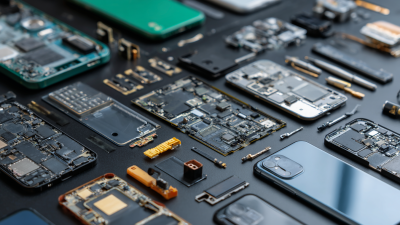
Reliable Chinese phone parts suppliers for European wholesale buyers should pass more than a price comparison. IDC reported approximately 1.17 billion smartphone shipments worldwide in 2023, sustaining demand for screens, batteries, cameras, and charging assemblies. This scale also creates uneven quality. Ask for traceable invoices, production photos, batch numbers, and test records before placing a large order.
Quality evidence matters most. Request sample parts from the same batch as the proposed shipment. Check screen brightness, touch response, battery capacity, connector alignment, and packaging protection. Suppliers should explain their inspection process and provide clear replacement terms for defective units. ISO 9001 certification can support confidence, but it does not replace independent testing. I have seen paperwork look excellent while small connector tolerances caused installation problems.
Compliance should be reviewed early. The EU Battery Regulation, CE-related requirements, RoHS restrictions, and WEEE obligations may affect different components and import arrangements. Ask for current declarations and laboratory reports, not generic files copied from another product. GSMA Intelligence continues to report high smartphone adoption across Europe, so demand is strong, but buyers should not confuse demand with easy resale. Compare lead times, minimum order quantities, customs documents, and payment protection. A supplier offering the lowest quote may become expensive after returns, delays, and technician labor. No checklist is perfect. Recheck samples after production changes.
European wholesalers need a clear view of the major phone parts market before placing bulk orders. Screens remain the largest category, including OLED, LCD, and touch digitizers. Batteries, charging ports, cameras, speakers, microphones, flex cables, housings, and small repair components follow closely. IDC reported approximately 1.24 billion smartphone shipments worldwide in 2024, showing the scale of future repair demand.
Quality differences matter. A replacement screen may look identical but perform differently under sunlight or pressure. Wholesalers should request brightness data, touch-response tests, battery cycle records, and connector inspection results. GSMA Intelligence has reported smartphone adoption above 80% in Europe, supporting continued demand for practical repair inventory. However, adoption figures do not measure replacement-part quality.
Small details prevent expensive returns.
Common stock should include popular screen sizes, charging assemblies, camera modules, and battery variants. Technicians also need adhesive strips, screws, brackets, and waterproofing materials. Counterpoint Research has documented continuing growth in device repair and refurbished-phone activity, although regional definitions vary. That limitation deserves attention.
A reliable European supplier should provide batch numbers, compatibility tables, safety documentation, and consistent packaging. Parts must arrive protected from dust, moisture, and electrostatic discharge. In my experience, wholesalers often focus on unit price first, then discover inconsistent color calibration or weak adhesive. That approach needs reconsideration. A slightly higher inspection cost can reduce failed repairs, shipping disputes, and lost technician time. Some inventory decisions remain imperfect, especially when model demand changes quickly.
| Major Part Category | Common Parts Available | Main Function | Typical Compatibility Information | Common Wholesale Pack Format | Key Quality Checks | Important European Market Considerations |
|---|---|---|---|---|---|---|
| Display Assemblies | OLED panels, LCD panels, touch-screen digitizers, display assemblies | Provides image output and touch input. | Device model, screen size, connector layout, frame configuration, and display technology | Individual protective boxes or cartons of 10–50 units | Dead-pixel inspection, touch sensitivity, brightness uniformity, connector condition, and frame alignment | Packaging should protect glass surfaces during international transport; product descriptions should clearly state whether the part is a full assembly or a separate panel. |
| Batteries | Replacement lithium-ion and lithium-polymer battery packs | Stores and supplies electrical energy to the phone. | Battery model code, rated capacity, nominal voltage, dimensions, connector, and compatible device model | Individual fire-resistant packaging or cartons with separated battery compartments | Capacity testing, swelling inspection, voltage consistency, cycle history where available, and connector fit | Lithium batteries are regulated for transport. Wholesalers should request appropriate transport documentation, labeling, and safety information before shipment. |
| Charging Components | USB charging ports, charging flex cables, wireless charging coils, charging boards | Transfers power and, in some designs, data between the phone and an external source. | Connector type, board layout, flex-cable length, screw-hole position, and device model | Antistatic bags with 20–100 pieces per carton | Charging-current stability, data-transfer function when applicable, solder quality, pin condition, and physical fit | Electrical documentation and safe packaging are important when parts contain circuit boards or are sold as powered accessories. |
| Cameras | Front camera modules, rear camera modules, depth-sensing modules | Captures photographs, video, and biometric or depth information where supported. | Sensor position, connector type, lens arrangement, software compatibility, and device model | Individual antistatic sleeves or trays of 10–50 modules | Focus accuracy, image clarity, dust or scratch inspection, autofocus operation, and connector integrity | Compatibility should be verified at the module and software level; identical physical dimensions do not always guarantee full functionality. |
| Audio Parts | Earpiece speakers, loudspeakers, microphones, speaker flex assemblies | Supports voice calls, media playback, and sound recording. | Acoustic chamber design, connector position, impedance, flex layout, and device model | Antistatic bags or compartment trays of 20–100 units | Sound output, microphone sensitivity, distortion, resistance measurement, and mesh condition | Small acoustic components should be protected from dust and moisture during storage and shipping. |
| Flex Cables | Power-button flexes, volume-button flexes, sensor flexes, fingerprint-button flexes | Connects buttons and sensors to the main circuit board. | Flex length, connector orientation, contact layout, mounting points, and device model | Antistatic bags with 50–200 pieces per carton | Continuity testing, crease inspection, connector-lock condition, button response, and adhesive quality | Parts should be labeled by exact model and revision because visually similar flex cables may not be interchangeable. |
| Housing and Structural Parts | Rear covers, midframes, SIM trays, camera glass, bezels, button sets | Protects internal components and restores the phone’s physical structure. | Dimensions, color or finish, antenna openings, camera cutouts, screw positions, and device model | Individual protective wrapping or cartons of 10–50 pieces | Dimensional accuracy, surface finish, adhesive strength, camera-window alignment, and scratch inspection | Materials, coatings, and packaging should be described accurately; glass components require impact-resistant packaging. |
| Internal Circuit Boards | Charging boards, signal boards, button boards, sensor boards, connector boards | Controls specific electrical functions and links components to the main board. | Board revision, connector layout, firmware dependency, component placement, and device model | Antistatic packaging with moisture protection where required | Short-circuit testing, connector inspection, component placement, current draw, and functional testing | Electronic parts should be handled with electrostatic-discharge protection and stored in dry, controlled conditions. |
| Small Replacement Components | Screws, brackets, adhesive strips, waterproof seals, mesh covers, magnets | Secures components and helps restore assembly quality. | Thread size, thickness, shape, adhesive pattern, and device model | Small labeled bags or boxes containing 100–1,000 pieces | Size accuracy, thread compatibility, adhesive strength, material consistency, and contamination inspection | Clear labeling is essential because small parts are easy to mix during warehouse handling and order fulfillment. |
| Repair Tools and Consumables | Opening tools, precision screwdrivers, suction tools, tweezers, thermal pads, cleaning materials | Supports safe disassembly, component replacement, and reassembly. | Tool size, material, electrical insulation, and intended repair application | Sets of 10–100 units or mixed repair kits | Handle strength, tip precision, insulation condition, chemical labeling, and packaging integrity | Chemical products and electrically powered tools may require additional safety information, labeling, or transport controls. |
| Quality and Documentation | Inspection reports, batch labels, compatibility lists, installation notes, warranty terms | Helps wholesalers identify, trace, install, and resell replacement parts accurately. | Batch number, production date where applicable, test method, compatible models, and defect policy | Digital documents plus labels on cartons or individual units | Traceability, consistent terminology, readable labels, and documented inspection procedures | European buyers generally benefit from transparent product information, responsible packaging, and records supporting product safety and traceability. |
For buyers comparing China phone-parts wholesalers for Europe, supplier price is only one variable. Import records should identify the correct HS code, country of origin, customs value, EORI details, and VAT treatment. Ask for commercial invoices, packing lists, transport documents, and traceable batch numbers. A missing declaration can delay a pallet at the border. It happens.
Certification depends on the part. Chargers, electronic displays, batteries, and radio-related modules may trigger different obligations. Under the EU RoHS framework, electrical equipment is assessed against restrictions on ten hazardous substances. The EU REACH system may also require communication about substances of very high concern. For products covered by CE legislation, importers should verify the declaration of conformity, technical file, test reports, and responsible economic operator details. CE is not a quality mark. It is a compliance statement. The EU Battery Regulation 2023/1542 adds labeling, documentation, and producer-responsibility duties for covered batteries.
The Global E-waste Monitor 2024 reported 62 million tonnes of e-waste in 2022. Only 22.3% was formally collected and recycled. This makes WEEE registration and take-back planning commercially important. National rules still differ across Europe. Request current laboratory reports, not screenshots. Check model numbers against physical samples. In my experience, a perfect-looking connector can fail after repeated insertion. Suppliers should explain warranty testing, failure rates, and corrective actions. I would challenge one assumption: the lowest landed cost can become the highest cost after returns, disposal, and customs storage. Documentation still needs human review.
Choosing a reliable Chinese phone-parts supplier for Europe requires more than checking the lowest quotation. My early comparisons focused too heavily on unit prices. That was a mistake. Landed cost also includes inspection, packaging, transport, duties, and possible replacement losses. Request samples before placing bulk orders. Check connector fit, screen brightness, battery capacity, and visible defects under consistent testing conditions. Ask for product specifications, batch records, and quality-control procedures. A professional supplier should explain differences between original-grade, refurbished, and compatible parts clearly.
Tips: Compare three quotations. Test samples. Confirm warranty terms in writing.
Logistics can decide whether a profitable order becomes expensive. Confirm stock availability, dispatch times, tracking, and delivery options to your European warehouse. Air shipping may suit urgent cartons, while consolidated freight can reduce costs for planned purchases. Check whether product labels and documents support lawful customs clearance. After-sales support matters just as much. Ask how defects are reported, how evidence is reviewed, and when replacements or credits are issued. A practical supplier should answer within an agreed period, not disappear after payment. No supplier is perfect. However, transparent communication, traceable batches, and measured response times provide stronger evidence than polished sales promises.