Medical equipment depends on components that often receive little attention until something fails. A Medical Device Adapter may power a bedside monitor, diagnostic instrument, or other clinical equipment, so compatibility is more than a matter of matching plugs. Voltage, current, connector type, electrical isolation, leakage current, and electromagnetic compatibility all deserve careful review. Small details matter. A connector that appears correct can still be unsuitable for a specific device.
This guide introduces ten medical device adapter manufacturers and explains what buyers may want to compare. It considers product range, technical documentation, quality systems, customization, and after-sales support. Manufacturer datasheets and official product information are useful starting points, but specifications should always be checked against the target device and its intended use. A polished website is not enough. No shortlist is perfect, and rankings can change with product requirements, region, and available evidence. That limitation is worth saying plainly. Readers should confirm current certifications and documentation directly with each manufacturer rather than rely on broad claims. For purchasing teams, engineers, and distributors, a careful comparison can narrow the field and help prevent avoidable compatibility problems.
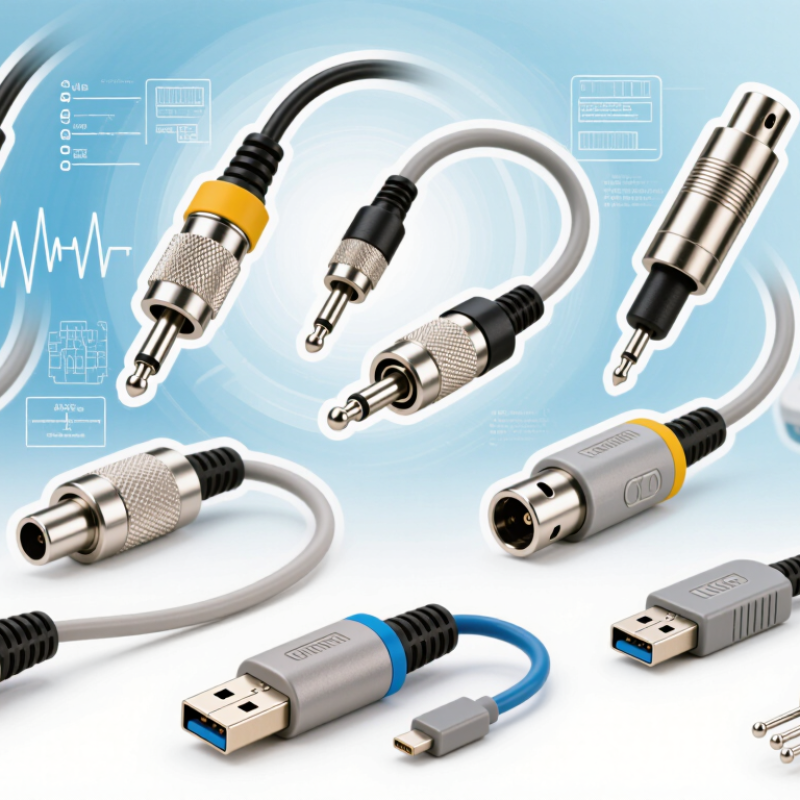
China Top 10 Medical Device Adapter Manufacturers
What Medical Device Adapters Are and How They Are Used
Medical device adapters connect components that would not otherwise fit or communicate directly. Depending on the application, an adapter may join tubing, match electrical connectors, or link a sensor to monitoring equipment. Its job is specific: provide a suitable interface without changing the intended function of the connected device. A small connector can make a real difference.
In a clinical setting, staff may use adapters when assembling compatible equipment for monitoring, treatment, or fluid delivery. The correct choice depends on the connection type, material, dimensions, and device instructions. For example, a tubing adapter must fit securely and suit the intended flow path. Electrical adapters require careful attention to voltage, polarity, and connector design. Compatibility should never be guessed from appearance alone. In practice, this is where assumptions can creep in; a familiar shape does not guarantee a safe match.
Tips: Check the device documentation before selecting an adapter. Inspect connections for looseness, cracks, or residue, and confirm that parts fit without force. If anything seems uncertain, pause and verify with a qualified technician. One overlooked detail can matter.
China’s medical-device adapter manufacturing industry is part of a much larger, diverse supply chain. The China Medical Device Industry Development Report 2023 estimated the overall domestic device market at about RMB 1.27 trillion in 2022. That figure covers the wider market, not adapters alone. Adapter demand comes from equipment makers needing stable power conversion, reliable connections, and components suited to specific clinical environments.
The National Medical Products Administration’s 2022 statistical report counted 32,632 medical-device manufacturing enterprises in China. This broad base can support sourcing across power adapters, cable assemblies, and interface components, but it does not mean every supplier specializes in medical applications. Details matter. Buyers should examine output voltage, isolation design, leakage-current performance, electromagnetic compatibility, and traceable production records. A neat product sheet is not enough.
Manufacturing often involves close coordination between electrical design, plastics, connectors, and testing teams. Small details count: plug fit, cable strain relief, and heat around a compact enclosure. Standards and customer specifications can also vary by device and destination market, so suitability needs to be verified for each application. One caution: public market reports rarely separate adapter sales from broader device categories. That leaves room for guesswork, and supplier claims deserve careful checking.
Selecting a Chinese medical device adapter manufacturer requires more than comparing unit prices. Confirm that the adapter matches the device’s voltage, current, connector, and operating conditions. Request dimensioned drawings and sample units, then check connector fit and cable strain relief. Small details matter.
Ask how materials and components are traced through production. Review relevant quality-system documents, inspection records, and change-control procedures. These records should be specific and current, not just polished brochures. For safety-critical use, clarify who verifies electrical performance and what tests are performed on finished units. Ask how defects are documented and how corrective actions are tracked.
Assess production capacity, lead times, and communication during engineering changes. A responsive team can help resolve fit or documentation issues, but promises alone are weak evidence. Request a sample run or a documented pilot evaluation before placing larger orders. Even a tidy audit can miss a problem that appears only after repeated use. I would not treat a single successful sample as proof of consistent production; that assumption is easy to make and worth challenging.
Suggested evaluation weights for comparing manufacturers—not company ratings or market-share data. Assess regulatory compliance against applicable requirements such as ISO 13485 and IEC 60601, alongside compatibility, quality controls, production capability, and support.
Profiles of 10 Leading Medical Device Adapter Manufacturers in China
China’s medical device adapter suppliers vary widely in engineering focus and production scale. These ten profiles describe useful supplier types, not an audited ranking. One focuses on custom cable assemblies, matching connector layouts to device requirements. Another develops compact power adapters, with attention to heat and stable output. A third makes medical-grade power supplies and should provide clear test records. Ask for evidence. A fourth specializes in monitoring-device connections, where secure plugs and reliable signal transfer matter.
A fifth serves imaging equipment, often handling more demanding power needs. A sixth offers OEM and ODM support, from early samples to production runs. A seventh takes on low-volume custom orders; flexibility can come with longer lead times. An eighth is geared toward larger batches, where consistent assembly and inspection are important. A ninth supplies replacement accessories for hospital equipment, so compatibility details deserve close review. The tenth emphasizes export support and technical documentation. Paperwork helps, but it cannot replace product testing.
When reviewing any supplier, compare connector drawings, output specifications, sample quality, and stated inspection procedures. Ask how design changes are recorded and how defects are handled. A polished catalog tells only part of the story. One weakness in this overview is that supplier capabilities overlap, and labels can oversimplify real factories. Buyers should confirm each detail directly and assess the adapter against the intended device and use conditions.
| Profile | Capability Area | Typical Adapter or Power-Supply Products | Example Medical Applications | Key Selection and Compliance Considerations |
|---|---|---|---|---|
| 01 | External AC/DC adapters | Enclosed external power adapters with device-specific output voltage, current, connector, and cable options. | Patient monitors and other portable or bedside equipment. | Confirm the device’s required output rating, connector polarity, leakage-current limits, and applicable medical electrical safety and EMC requirements. |
| 02 | Compact medical power supplies | Compact AC/DC power units designed for integration into equipment or a dedicated enclosure. | Small diagnostic instruments and space-constrained medical devices. | Check operating temperature, ventilation, insulation, grounding, and performance under the intended load. |
| 03 | Infusion-equipment power solutions | Power adapters or integrated supplies specified for equipment that may also use an internal battery. | Infusion pumps and syringe pumps. | Verify compatibility with the device’s charging and power-management design; backup operation depends on the equipment configuration. |
| 04 | Respiratory-device power solutions | AC/DC supplies and, where designed for the equipment, battery-charging power units. | Respiratory support and ventilation equipment. | Assess continuous-duty operation, thermal performance, electrical protection, and the device maker’s specified power requirements. |
| 05 | Imaging-equipment power supplies | Power units selected to meet the voltage, current, and electrical-noise requirements of the host system. | Ultrasound and other diagnostic imaging equipment. | Check electromagnetic compatibility and ensure the power unit is approved for the specific equipment design. |
| 06 | Dental-equipment power solutions | External adapters or integrated power supplies matched to the equipment’s electrical and enclosure requirements. | Dental diagnostic and treatment equipment. | Confirm the intended environment, connector and cable specifications, cleaning-related enclosure requirements, and applicable safety standards. |
| 07 | Surgical-equipment power solutions | Power supplies engineered for the host device’s specified input, output, and protection requirements. | Selected operating-room and surgical support equipment. | Evaluate grounding, isolation, leakage current, EMC, and system-level compliance; requirements depend on the device classification and use. |
| 08 | Laboratory and IVD power supplies | AC/DC supplies for benchtop instruments, analyzers, and related equipment. | In-vitro diagnostic and clinical laboratory instruments. | Check output stability, load behavior, operating conditions, and compatibility with the finished instrument. |
| 09 | Medical-cart and multi-device power solutions | Power units or charging arrangements designed for a defined cart or equipment configuration. | Mobile clinical workstations and equipment carts. | Review the complete system’s total load, cable routing, grounding, charging arrangement, and applicable system-level safety requirements. |
| 10 | Custom OEM power assemblies | Customized AC/DC power assemblies, cables, connectors, or multiple-output configurations developed to a device specification. | Medical equipment requiring a non-standard mechanical or electrical configuration. | Define requirements with the device manufacturer and verify the finished medical electrical system against applicable standards, including IEC 60601-1 and IEC 60601-1-2 where relevant. |
Note: This is a non-ranked overview of common medical power-supply capability areas, not a verified list of ten specific companies. Product requirements and applicable certifications vary by device and finished-system design.
When comparing medical device adapter manufacturers, begin with intended use, connector type, output stability, and operating conditions. Ask how each supplier controls incoming components, assembly, and final electrical testing. Request sample inspection records, lot traceability, and clear acceptance criteria—not just a polished brochure. On a bench, check connector fit, cable strain relief, temperature rise, and label consistency. Small details matter.
A capable manufacturer should explain which quality-system certificates and test reports apply to your target market and specific adapter configuration. Confirm that documents cover the actual production site and model. Verify them with the issuing organization when possible. Compliance is not transferable by assumption.
Tips: Compare response times, engineering-change notices, spare-part availability, and escalation contacts. Send every candidate the same drawing and test requirements. Their answers can show whether service is practical or vague. Ask how repeatability is monitored across production lots; one successful sample is not enough. Still, supplier questionnaires have limits, and they may not reveal every variation on the factory floor.