Selecting the right Medical Device Piston Assembly begins with understanding its exact job. Will it meter a small fluid dose, move repeatedly under pressure, or operate beside sensitive components? Those details shape the choice of piston material, seal design, surface finish, and tolerances. A piston that looks suitable on a drawing may behave differently after repeated cycles. Small changes matter.
Start with the working conditions. Record the fluid, temperature range, pressure, stroke length, speed, and expected cycle count. Then assess friction, leakage risk, cleaning needs, and compatibility with the surrounding assembly. A few micrometers of clearance can affect motion and sealing. So can a rough edge. Ask suppliers for dimensional data, material specifications, inspection records, and test results tied to the intended use. Check how they control variation between production lots. Do not rely on a catalog description alone.
Expert quotation: “Choose the piston for its full operating conditions, not dimensions alone.” This is an original editorial line, not a verified quotation. Insert a named specialist’s confirmed words before publication; no source was provided to verify an expert attribution. That distinction matters. Credible selection depends on evidence, not impressive-sounding claims. A useful evaluation also considers assembly fit, maintenance access, and what happens when performance drifts. Not every trade-off has an obvious answer. Document the assumptions, test representative assemblies, and revisit them when the design or process changes.
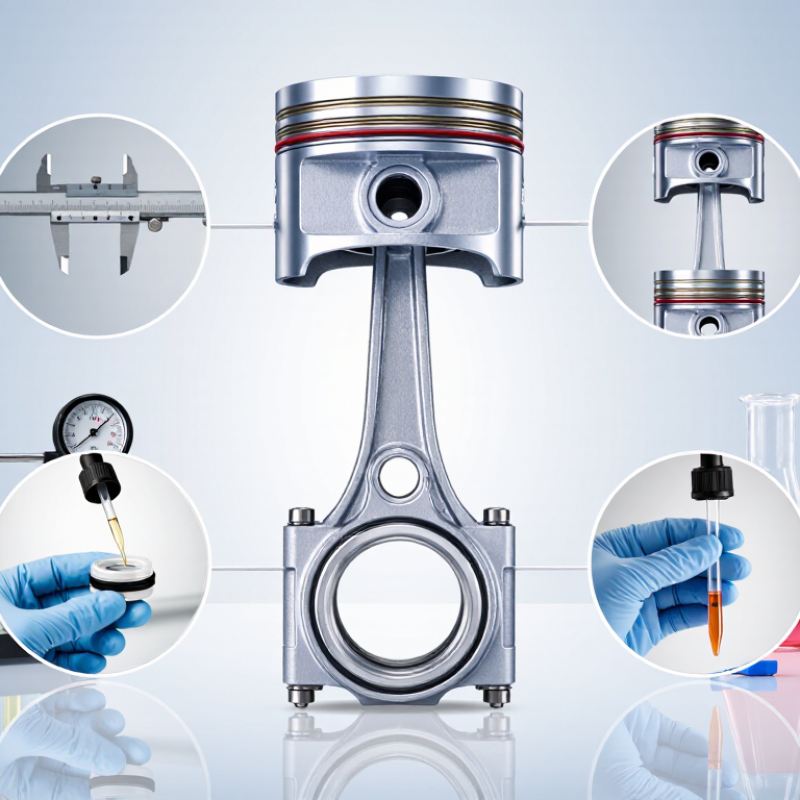
Before comparing materials or tolerances, define what the piston assembly must do inside the device. It may push a measured fluid volume, maintain a seal, or translate actuator motion into repeatable linear travel. Its role determines which dimensions matter most: bore fit, stroke length, seal contact, and allowable friction. Small differences can change delivery consistency. That matters.
In a syringe-based instrument, the piston may move through a barrel while resisting leakage and avoiding excessive force. In a dosing pump, stroke repeatability and low dead volume may matter more. Not every device has the same priorities. The assembly also interacts with the actuator, housing, fluid path, and any sensors that monitor movement. A material suited to one fluid or temperature range may behave differently in another. Check actual exposure conditions.
Write the role as observable requirements: target displacement, operating force, leakage limits, service life, and expected cleaning or sterilization exposure, where applicable. Then test the assembled device, not just a loose piston. Measure force across the full stroke and inspect seals after cycling. A precise CAD fit can still bind when components expand or alignment shifts. This is where judgment matters. Keep assumptions visible, and revise them when test data disagrees.

Before choosing a medical device piston assembly, map its actual operating conditions. Record the working fluid or gas, pressure range, temperature, stroke length, cycle rate, and cleaning exposure. A piston in a warm, frequently cycled pump may wear differently from one moving slowly in a dry instrument. Check startup and shutdown conditions, too; brief pressure spikes can matter. Do not rely only on nominal values. Measure where practical.
Tips: Keep a duty-cycle log during representative use. Note leakage, friction changes, noise, and temperature. Compare observations with the device’s performance limits, not just catalog figures. Small variations can be informative.
Translate the requirements into measurable acceptance criteria: allowable leakage, positioning repeatability, response time, and service interval. Confirm that materials and seals suit the working medium and cleaning process, and that tolerances match the mating bore and rod. Bench testing under realistic load helps, but may not reproduce every field condition. That’s worth admitting. Review trial results and user feedback, then revise the specification if early assumptions prove too neat. A piston that moves smoothly once may behave differently after thousands of cycles.
Choosing a medical device piston assembly starts with its fluid, pressure, and contact profile. Silicone or other elastomers can seal well, but compression set may weaken performance over repeated cycles. Rigid polymers offer dimensional stability; metal can tolerate demanding loads but may increase friction or require added surface finishing. Test the actual fluid path, not just a material datasheet.
Design details matter. A narrow sealing lip can reduce leakage, yet become sensitive to molding variation. A broader contact surface may improve stability but increase sliding resistance. ISO 10993-1:2018 defines limited contact as up to 24 hours, prolonged contact as over 24 hours to 30 days, and long-term contact as over 30 days. Those thresholds help frame biological evaluation. They do not replace testing of the finished assembly.
Manufacturing choices shape repeatability. Injection molding suits high-volume polymer parts, while machining can help refine early prototypes or tight features. Assembly controls—lubricant amount, alignment, and inspection—also affect breakaway force. The ISO Survey 2023 reports more than 30,000 ISO 13485 certificates worldwide; certification signals a quality-system framework, not proof that a specific piston performs reliably. Measure leakage, force, and wear across realistic cycles. Small differences matter. And a clean prototype may still behave differently after scale-up.
How to Choose the Right Medical Device Piston Assembly
Compatibility begins at the interface, not in the catalog. Confirm bore diameter, stroke, side load, fluid exposure, and connector geometry against the device’s operating range. Small gaps matter. Measure components under realistic temperatures; polymers can swell, creep, or stiffen. Check seals and lubricants for contact compatibility, too. A perfect fit on a drawing may behave differently in a working device.
Reliability depends on repeatable motion, controlled leakage, and stable performance after use. Review dimensional tolerances, cycle-life evidence, and inspection criteria with the assembly supplier. Then test representative assemblies in the finished device. A single successful bench run proves little. The CDC’s 2018 National and State Healthcare-Associated Infections Progress Report cites roughly one infection for every 31 hospital patients on a given day. This is a broad hospital-level measure, not a piston failure rate, but it underscores why dependable infection-control processes matter.
Sterilization requirements should shape material and design choices early. Identify the intended method, exposure time, temperature, and number of cycles. The FDA’s 2015 guidance on reprocessing reusable medical devices emphasizes validating cleaning and reprocessing instructions. Test the actual assembly after repeated sterilization, checking for seal damage, residue, dimensional change, and altered force. I would not rely on material data alone; real assemblies can surprise you. And sometimes, the test plan needs another revision.
| Assessment Area | What to Check | Practical Reference | How to Verify |
|---|---|---|---|
| Fluid and material compatibility | Contact between the piston, seals, housing, and the intended fluid, including cleaning agents and lubricants. | Compatibility depends on the exact material grade, fluid concentration, temperature, and exposure duration. Silicone, EPDM, PTFE, and stainless steel each have different chemical resistance profiles. | Review material data for the exact grades and test for swelling, cracking, softening, corrosion, leakage, or changes in actuation force after exposure. |
| Bore, stroke, and fit | Cylinder bore, piston diameter, stroke length, seal dimensions, and required running clearance. | These dimensions are design-specific. Tolerances must account for material expansion, manufacturing variation, and operating temperature. | Check drawings and tolerance stacks; measure representative assemblies and confirm smooth movement across the full stroke. |
| Pressure and leakage | Working pressure, pressure direction, transient loads, and the acceptable leakage limit for the device. | A seal that performs under static pressure may behave differently during repeated motion or pressure cycling. Set limits based on the device's intended use and risk analysis. | Test at defined operating and worst-case conditions, including pressure cycling and post-sterilization checks where applicable. |
| Actuation force and friction | Starting force, running force, return behavior, and variation over the service life. | Seal material, surface finish, lubrication, and fit can all affect friction. Lubricants must be suitable for the intended fluid path and regulatory requirements. | Measure force over the full stroke before and after aging, cycling, cleaning, and sterilization exposures. |
| Wear and particle generation | Seal abrasion, material shedding, surface damage, and contamination risk during repeated movement. | Wear depends on contact pressure, surface finish, lubrication, fluid, and cycle count; it cannot be inferred from material name alone. | Run representative life-cycle testing and inspect the assembly and fluid path using suitable particle and wear assessment methods. |
| Sterilization method | Whether the assembly is sterilized by moist heat, ethylene oxide (EtO), radiation, or another validated process. | Moist-heat cycles commonly use temperatures such as 121°C or 134°C, but actual cycle conditions vary. EtO and radiation can also affect polymers differently. | Confirm compatibility for the exact material grade and validated cycle, then assess dimensions, sealing, force, and appearance after repeated exposures if applicable. |
| Sterilization-related material changes | Hardness, compression set, tensile properties, discoloration, brittleness, and seal recovery after processing. | Repeated heat or radiation exposure may change polymer properties. EtO processes also require control of residuals and adequate aeration. | Test finished assemblies after the maximum intended number of sterilization cycles and after applicable aging or storage conditions. |
| Biological evaluation | Nature and duration of patient contact, fluid-path contact, and potential exposure to material constituents or residues. | Biological evaluation is based on the finished device and its intended use, not solely on a material's generic description. | Determine applicable evaluation needs using a risk-based approach, such as the ISO 10993 series where applicable. |
| Service life and maintenance | Expected stroke count, shelf life, storage conditions, and whether the assembly is single-use or reusable. | Reusable designs need defined cleaning, inspection, and replacement criteria; single-use designs still require validation for their labeled shelf life and use conditions. | Establish acceptance criteria through life-cycle, packaging, storage, and reprocessing validation as relevant to the device. |
| Process and regulatory documentation | Material traceability, specifications, change control, sterilization validation, and risk-management records. | Relevant standards may include ISO 14971 for risk management and ISO 11135, ISO 11137, or ISO 17665 for applicable sterilization processes. | Confirm the standards and regulatory requirements applicable to the device, market, and sterilization method with the quality and regulatory teams. |
Note: These checkpoints are general selection guidance. Final material choices, tolerances, performance limits, and sterilization conditions should be validated for the specific device design and intended use.
When evaluating a medical device piston assembly, check whether its supplier’s quality system supports the regulations in your target markets. In the United States, FDA’s Quality Management System Regulation took effect on February 2, 2026, aligning requirements with ISO 13485:2016. Ask for current certificates, audit findings, change-control records, and lot-level traceability. A certificate alone is not enough.
Confirm that drawings specify critical dimensions, materials, and acceptance limits, then verify them against inspection records. For a piston, a small dimensional shift can affect seal contact or fluid delivery.
Look for documented risk controls across manufacturing, cleaning, packaging, and sterilization, where applicable. Request evidence of seal-integrity testing and material compatibility under intended use conditions.
WHO’s patient-safety fact sheet reports that about one in ten patients experiences harm in health care, with more than half of harm considered preventable. That broader finding makes weak component controls worth taking seriously, even when a part looks simple.
Review nonconformance and corrective-action records, not just polished summaries. A clean audit is not proof. I would also ask how suppliers notify customers about process changes; teams sometimes overlook this question.
Keep your own review notes, link each requirement to evidence, and record unresolved gaps before approval.