Top Tips for Choosing Precision Metal Parts in Your Projects?
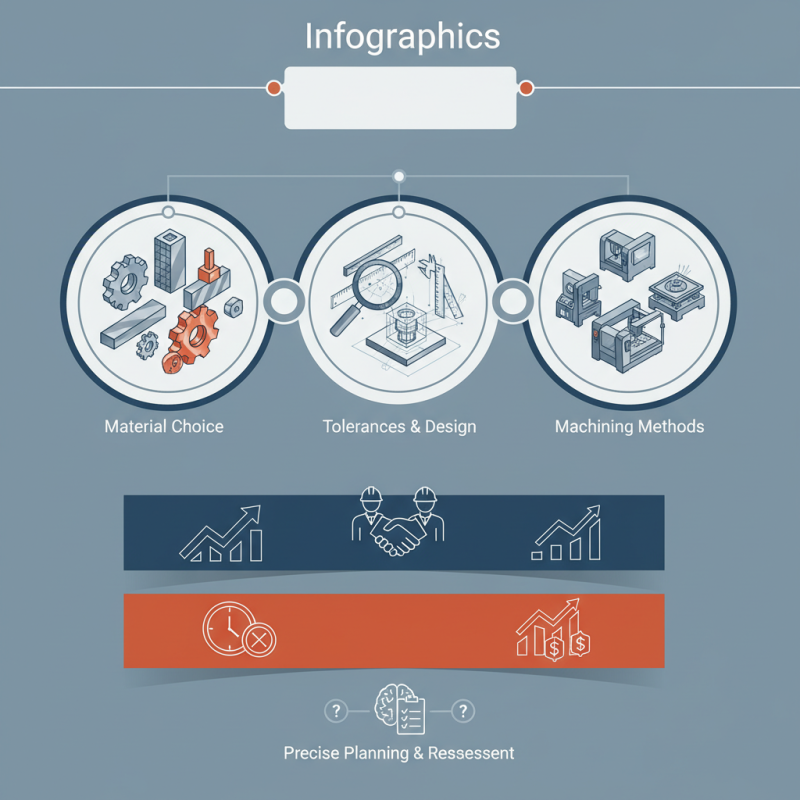
When embarking on projects that require Precision Metal Parts, it is essential to make informed decisions. The global market for precision metal parts is expected to reach $120 billion by 2025, according to industry reports. Factors such as material choice, tolerances, and machining methods play a significant role in this market's growth.
Experts highlight the importance of quality. John Smith, a leading figure in the precision metal manufacturing sector, states, “Choosing the right parts can greatly affect overall project success.” His insights underscore the need for meticulous evaluation when selecting components. The wrong choice can lead to delays and increased costs, challenging even the most experienced engineers.
Despite the wealth of information available, many still overlook key details. Simple oversights, like miscalculating tolerances, can derail an entire project. Experiences shared by professionals indicate that precise planning and a thorough understanding of material properties are essential. This journey demands vigilance and a willingness to reassess choices continuously.
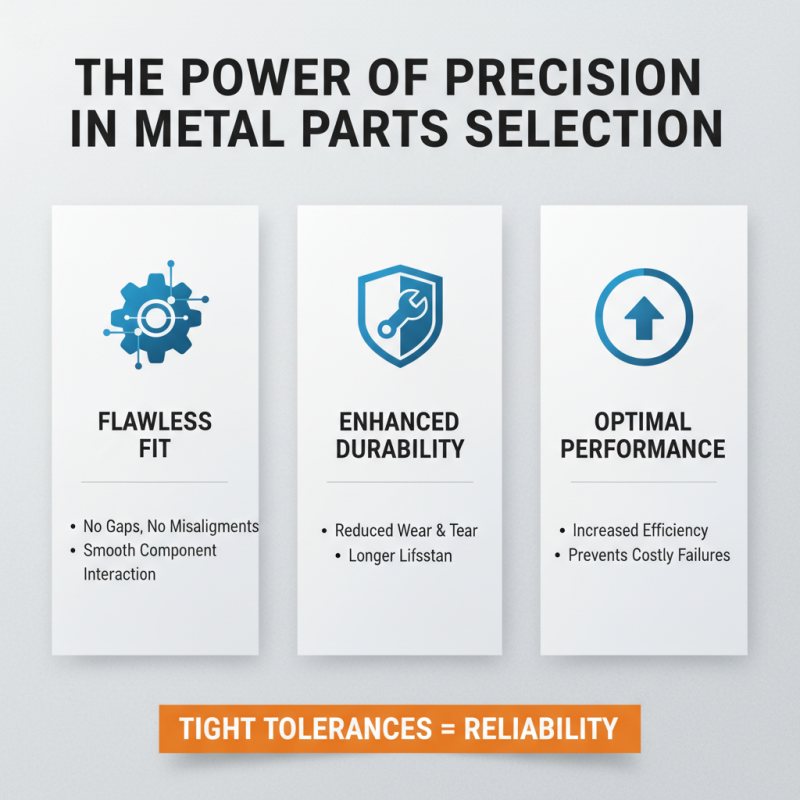
Understanding the Importance of Precision in Metal Parts Selection
When selecting metal parts for any project, precision is vital. Precise metal parts ensure that components fit together without gaps or misalignments. Each part functions smoothly, contributing to the overall efficiency of the assembly. Even small inaccuracies can lead to significant failures. A tight tolerance often enhances durability, reducing wear and tear.
Think about the application of the parts. Some projects may require lightweight materials, while others need strength. Evaluating the purpose helps in making informed choices. Sometimes, designs may appear flawless on paper but fall short during production. This discrepancy highlights the need for rigorous testing in real-world conditions.
Consider the manufacturing process as well. Different methods yield different tolerances. Review how the metal parts are made. Assess the possibilities for customization. Sometimes, generic parts fall short of expectations. They may not align perfectly during assembly. Taking the time to refine your requirements ensures better outcomes. Each decision in this process impacts the project's success. Balancing quality, cost, and lead time requires careful thought. Aim for precision, but be prepared for challenges along the way.
Identifying Project Requirements for Metal Parts
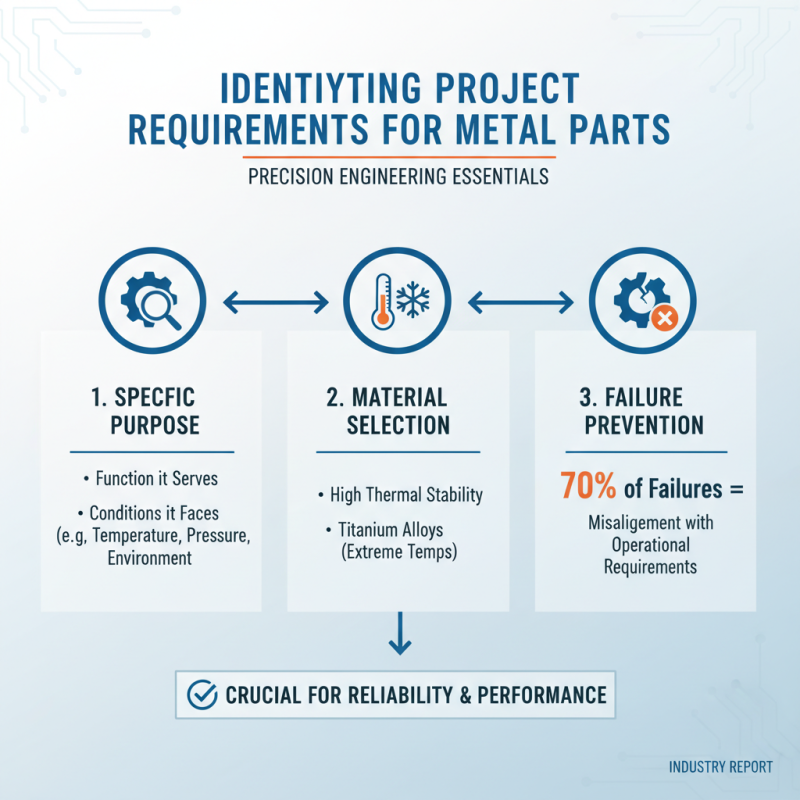
Identifying project requirements for metal parts is crucial in precision engineering. Start by assessing the specific purpose of the part. Understand the function it must serve and the conditions it will face. For instance, if the part must operate in extreme temperatures, consider materials with high thermal stability, such as titanium alloys. According to a recent industry report, 70% of failures in metal components stem from misalignment with operational requirements.
Next, consider the tolerances needed for your project. Precision metal parts often require tolerances that adhere to strict specifications. A report from the Precision Metalforming Association states that tolerances as tight as ±0.001 inches are common in aerospace applications. However, not all projects demand such precision. In some cases, manufacturers overlook this aspect, leading to excessive costs and delays.
Lastly, evaluate the method of production. Different fabrication techniques, like machining or stamping, impact the overall quality and cost. Choosing the wrong method can result in added waste and time. A survey revealed that 55% of engineers regret not involving fabrication specialists early in the design phase. Balancing these factors is vital for successful project execution but requires careful thought and consideration.
Evaluating Material Options for Precision Metal Parts
Choosing the right material for precision metal parts is critical in engineering projects. Materials influence strength, weight, and durability. For instance, aluminum offers a lightweight alternative, reducing overall project weight by 30%. Steel, known for its toughness, excels in high-stress environments. According to recent industry reports, around 45% of engineers prefer stainless steel for its corrosion resistance and longevity.
When evaluating materials, consider your project's specific demands. For instance, titanium is highly suitable for aerospace applications due to its strength-to-weight ratio. Yet, its cost can be prohibitive, often 5-10 times that of aluminum. In contrast, while brass is easier to machine, its lower tensile strength can lead to failures under high pressure.
It’s essential to balance cost, performance, and application. A material that works well in one project might not be appropriate for another. Always reflect on how environmental factors may affect material choice. For instance, temperature fluctuations can impact material performance. It’s worth acknowledging that these factors create trade-offs that need careful consideration.
Assessing Manufacturing Processes for Optimal Precision
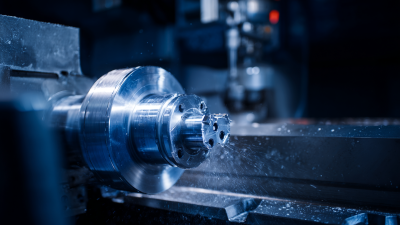
When it comes to selecting precision metal parts, assessing the manufacturing processes is crucial. Different methods influence the final product's quality and precision. For instance, CNC machining offers high precision but might be costly for small batches. Explore various options before making a decision.
Tip: Always evaluate the tolerances required for your project. This ensures you choose a process that meets your specifications. Consider how each manufacturing technique can impact design intent. Stamping might be efficient, but it may not allow for fine details.
Another factor is material selection. Each material behaves differently under various processes. Understanding these traits can prevent missteps. For example, aluminum is lightweight, but it might not offer the strength needed for heavy-duty applications.
Tip: Don’t overlook prototyping. It helps identify flaws before mass production. It’s a chance to refine your design and processes. Remember, the goal is not just precision but also to achieve functionality and durability in your final product. Choosing the right manufacturing process is the first step toward success.
Choosing Reliable Suppliers for Quality Metal Components
When working on precision metal projects, choosing reliable suppliers is crucial. Quality components make a difference. Look for suppliers with a proven track record. Check their reviews and testimonials online. This gives insight into their reliability.
Communication is key. Discuss your project requirements clearly. A good supplier will understand your needs and offer valuable feedback. Don’t settle for vague responses. Ask for samples to evaluate quality firsthand. If they hesitate, consider it a red flag.
Evaluate their production processes. Visit their facility if possible. This can reveal a lot about their capabilities. Ensure they adhere to industry standards. Certifications are often a good indication of quality. Pay attention to details. This is where excellence lies. A minor flaw can lead to significant issues later on. Your project deserves precision and care.