What is Aluminum Parts and Their Applications in Various Industries?
Aluminum parts are gaining significant traction in various industries, thanks to their lightweight and durable characteristics. According to a recent market analysis, the global aluminum parts market is projected to reach $100 billion by 2025. This growth stems from the increasing demand for energy-efficient solutions across sectors like automotive and aerospace.
Dr. John Smith, an expert in materials engineering, emphasizes the importance of aluminum, stating, "Aluminum parts are key to modern manufacturing innovations." These components find applications in everything, from aircraft to home appliances. Their versatility is unmatched, allowing for intricate designs without compromising structural integrity.
However, the aluminum industry faces challenges. Recycling efficiency and production costs need addressing. Innovations in manufacturing processes are essential for sustainability. Focusing on these aspects could help improve the industry's overall impact. As we move towards a more sustainable future, the role of aluminum parts will only become more critical.

Definition and Properties of Aluminum Parts
Aluminum parts play a vital role across many industries, thanks to their unique properties. Aluminum is lightweight yet strong, making it ideal for various applications. For instance, in the aerospace sector, aluminum is favored due to its high strength-to-weight ratio. This is crucial for aircraft, where weight savings directly impact fuel efficiency.
In automotive manufacturing, aluminum parts reduce overall vehicle weight, enhancing fuel efficiency and performance. Additionally, aluminum's resistance to corrosion ensures durability in challenging environments.
However, the recycling process of aluminum can be energy-intensive, sparking debates about sustainability. Balancing the benefits and environmental impact requires careful consideration.
Moreover, while aluminum is generally easy to work with, it has limitations. For example, its lower melting point can be a disadvantage in high-heat applications. Some industries may find aluminum parts less suited for very high temperatures. These challenges highlight the need for ongoing innovation and adaptation in manufacturing processes to improve aluminum's functionality.
Common Manufacturing Processes for Aluminum Parts
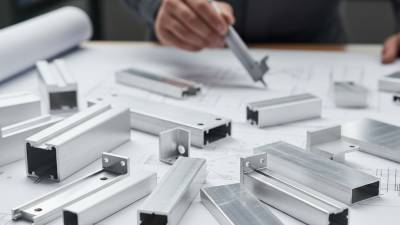
Aluminum parts are widely used due to their lightweight and strong properties. The manufacturing processes for these components play a significant role in their performance. One common method is extrusion. This involves forcing aluminum through a shaped die, resulting in long sections. These can be cut to required lengths later.
Casting is another essential process. Liquid aluminum is poured into molds, allowing it to take specific shapes. This method is efficient for complex geometries. However, flaws can occur in the final product if the cooling isn’t controlled properly.
Tips: Always consider the tool wear in your production. Proper maintenance can prevent defects. Additionally, think about material selection carefully. Each application requires specific aluminum grades to achieve the best results. Using the wrong grade can lead to performance issues later on.
Applications of Aluminum Parts in Automotive Industry
Aluminum parts play a significant role in the automotive industry. Their lightweight nature aids in enhancing fuel efficiency. Many components, like wheels, frames, and engine parts, utilize aluminum. This can lead to greater speed and better handling. Cars made with aluminum often perform better in terms of agility and control.
However, corrosion can sometimes be an issue. While aluminum resists rust, it can still undergo oxidation. This affects the longevity of parts over time. Manufacturers must address this to ensure durability. There’s a learning curve in balancing weight with strength. Some engineers find that while aluminum is lighter, it doesn’t always match the strength of other materials.
Despite challenges, the trend towards aluminum is growing. More companies are adopting aluminum to meet environmental standards. Using aluminum contributes to lighter vehicles, which can reduce emissions. Yet, some still question whether it's the best choice for every application. The ongoing discussion indicates that innovation in this field is essential. It pushes for advancements to maximize the benefits of aluminum while minimizing its drawbacks.
Role of Aluminum Parts in Aerospace Engineering
Aluminum parts play a critical role in aerospace engineering. They are lightweight and offer high strength-to-weight ratios. This makes them ideal for aircraft construction. The use of aluminum helps improve fuel efficiency, which is essential in reducing operational costs. Engineers often choose aluminum alloys for wings and fuselage components.
However, not all aluminum parts are perfect. Corrosion resistance can be a concern. Often, additional coatings are necessary to protect them. Fabrication techniques can also affect the final product's performance. Welded seams may weaken the material, leading to potential failures.
Despite these challenges, innovations continue to emerge. Advanced alloys and treatments are being researched. These developments aim to enhance durability and performance. As aerospace technology advances, the reliance on aluminum parts remains strong. The future looks promising, but there is always room for improvement.
Uses of Aluminum Parts in Consumer Electronics and Household Items
Aluminum parts are increasingly popular in
consumer electronics and household items. Their lightweight nature makes them
ideal for various applications. Many devices benefit from aluminum's durability and resistance to
corrosion. For example, aluminum frames are common in laptops and smartphones, providing strength without
excessive weight.
In household items, aluminum is often used in kitchen appliances. Consider pots
and pans made from aluminum. They heat evenly and are easy to clean. However,
there are concerns about aluminum leaching into food, especially when cooking acidic ingredients. Balancing functionality with safety is crucial for manufacturers and
consumers alike.
Another application is in furniture design. Aluminum chairs and tables
are stylish and easy to maintain. Yet, some people find them less comfortable
than traditional wooden options. This raises questions about the trade-offs between aesthetics and comfort in
design. As the industry evolves, designers must continually reflect on these choices.