Leave Your Message

China Top Automotive Body Parts Manufacturers?

China has become a major source of Automotive Body Parts for vehicle brands, repair networks, and aftermarket distributors. Its manufacturing base includes stamping plants, injection molding facilities, aluminum foundries, and assembly specialists. This guide introduces leading Chinese manufacturers through practical, verifiable criteria rather than advertising claims. Factory capability matters, but consistent quality matters more.

The evaluation focuses on material control, tooling accuracy, production capacity, surface treatment, and quality inspection. It also considers certifications, export experience, engineering support, and traceability systems. Buyers should examine drawing control, sample approval, dimensional reports, and packaging protection. A well-made fender should arrive without dents, uneven gaps, or unstable coating. Small defects can create expensive delays during assembly.

Supplier rankings are never permanent. Market conditions, ownership changes, equipment upgrades, and customer feedback can alter performance. Some manufacturers present impressive facilities but provide limited evidence of long-term reliability. That deserves careful reflection. This overview therefore encourages direct audits, independent testing, and reference checks before any purchase decision. Pricing alone cannot measure value. A lower quotation may hide weaker steel, inconsistent molds, or costly rework. The strongest partners usually communicate clearly, document changes, and respond quickly when problems appear. Readers can use this introduction to compare China’s top Automotive Body Parts manufacturers with greater confidence, while recognizing that every supplier requires individual verification.
China Top Automotive Body Parts Manufacturers?

What Automotive Body Parts Manufacturers Produce in China

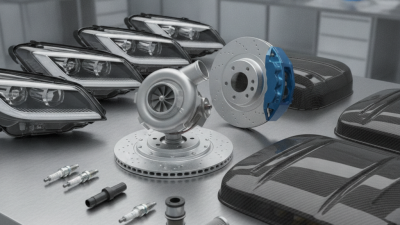
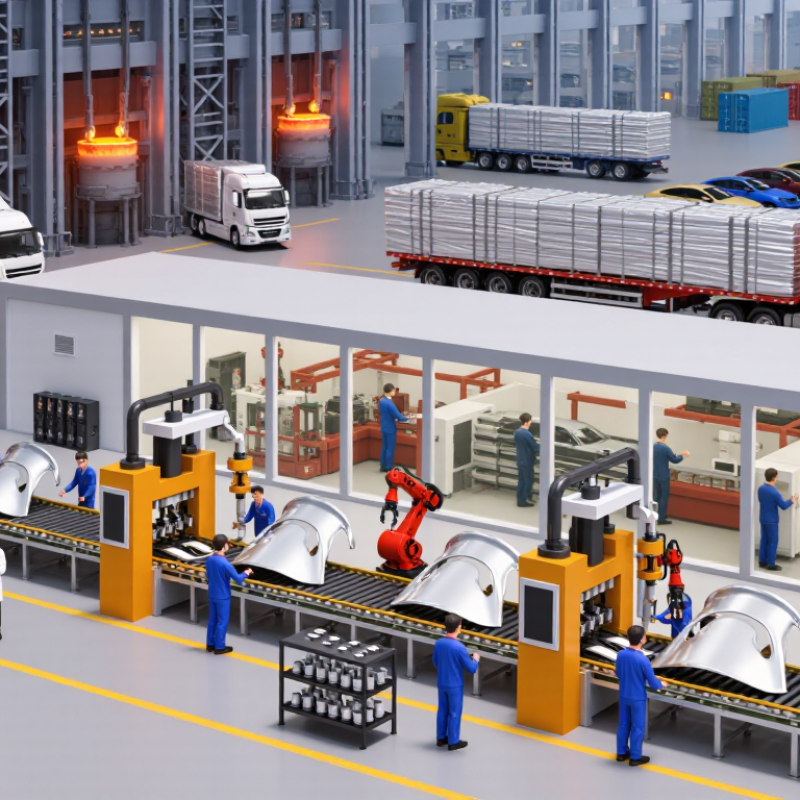
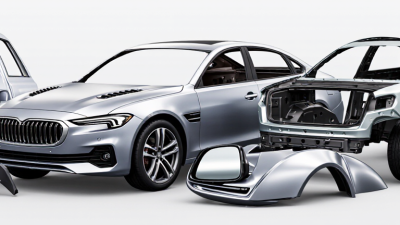
China’s automotive body parts manufacturers produce far more than visible exterior panels. They make stamped doors, hoods, fenders, roof panels, trunk lids, and quarter panels. Many factories also produce bumpers, grilles, rocker panels, and underbody shields. Some specialize in lightweight aluminum or high-strength steel components. Others combine metal stamping with plastic molding and surface finishing. This range supports passenger cars, commercial vehicles, and electric platforms. Production usually begins with digital drawings, prototypes, and precision dies.

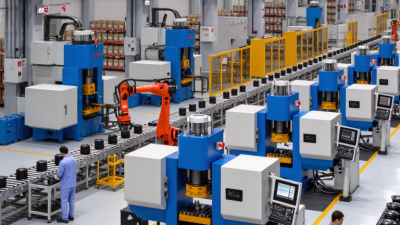
Experienced manufacturers manage cutting, forming, welding, riveting, and dimensional inspection under one roof. Robotic welding can improve repeatability, but skilled technicians still correct fixture problems. They check hole positions, panel gaps, coating thickness, and corrosion resistance. Common tools include coordinate measuring machines, laser scanners, and calibrated gauges. Suppliers may also produce structural rails, crossmembers, crash boxes, seat brackets, and battery enclosures. These parts require tighter control than decorative trim.

A polished sample can hide weak production discipline. No factory gets every detail right. Buyers should request material certificates, inspection records, traceability, and controlled packaging. Packaging deserves attention because a perfect panel can arrive with edge damage. Clear drawings matter too. Small tolerance errors may create noise, poor fit, or expensive rework. Chinese manufacturers offer broad capabilities, yet equipment, process control, and communication still need careful verification.
Key Manufacturing Regions and Industry Clusters

China’s automotive body parts manufacturing is concentrated in several practical regional clusters. The Yangtze River Delta links stamping, aluminum forming, tooling, and port logistics across Jiangsu, Zhejiang, and Anhui. The Pearl River Delta adds strong electronics, mold-making, and export capabilities. Bohai Rim remains important for steel processing and large-scale body structures.

The numbers show the market’s depth. The China Association of Automobile Manufacturers reported 30.16 million vehicles produced in 2023. New-energy vehicle production reached 9.59 million units. This volume supports dense supplier networks and shorter delivery routes.

Central China, including Hubei and Hunan, benefits from inland transport links and lower operating costs. Southwest clusters, especially around Chongqing and Sichuan, are developing body welding and lightweight-material capacity.

Factory visits reveal a practical difference. Some plants run automated stamping lines beside manual inspection stations. That combination improves flexibility, but it can expose uneven quality control. The National Bureau of Statistics also shows China’s strong manufacturing base, although regional capability is not perfectly balanced. Suppliers should therefore assess tooling accuracy, material traceability, welding consistency, and port or rail access before selecting a manufacturing region. Price alone can mislead.

How Chinese Automotive Body Parts Are Designed and Made

China’s automotive body parts are designed through a practical mix of engineering data and production experience. Engineers study vehicle dimensions, crash requirements, material strength, and assembly tolerances. They usually begin with digital models, then create prototypes for fitment checks. A door panel may look simple, but its curves, holes, and edges must align precisely.

Manufacturing often starts with steel or aluminum sheets cut into controlled blanks. Stamping presses shape these blanks through several forming stages. Skilled technicians adjust dies when wrinkles or springback appear. Robotic welding improves consistency, while manual inspection catches small surface defects. Parts may receive cleaning, coating, and corrosion testing before shipment. Measurement tools verify thickness, hole positions, and panel gaps. Still, no process is perfect. A supplier may pass a dimensional check but overlook packaging damage during transport.

Tips: Request material certificates, inspection records, sample approvals, and clear tolerance data. Check whether the supplier uses traceable batches and repeatable testing equipment. Ask for production photos or an audit when possible. Fit one sample before ordering large quantities. This simple step can reveal hidden alignment problems. Also review surface quality under bright light. Minor marks are easy to miss in a workshop. Better documentation usually means fewer surprises.

China Top Automotive Body Parts Manufacturers? - How Chinese Automotive Body Parts Are Designed and Made

Manufacturing Area Typical Materials or Equipment Typical Industry Data Design and Production Method Main Quality Controls
Body-in-White Material Selection High-strength steel, advanced high-strength steel, galvanized steel, aluminum sheet Common sheet thickness is approximately 0.6–2.5 mm for stamped body panels; structural members may be thicker. Material grade is selected according to crash performance, stiffness, corrosion resistance, weight, and forming behavior. Incoming inspection of thickness, coating, tensile properties, yield strength, and material certificates.
Computer-Aided Design 3D CAD, surface modeling, digital assembly, and engineering simulation software Digital models define panel geometry, joining points, assembly interfaces, and inspection datums before tooling begins. Design teams optimize springback, draw depth, flange geometry, accessibility, and manufacturability through virtual analysis. Design reviews, interference checks, tolerance analysis, and comparison with approved engineering drawings.
Stamping and Forming Mechanical or servo presses, progressive dies, transfer dies, and deep-drawing tools Press capacity commonly ranges from several hundred to several thousand tonnes, depending on panel size and material strength. Blanking, drawing, trimming, piercing, flanging, and restriking are used to produce doors, hoods, fenders, roofs, and structural panels. Surface inspection, dimensional measurement, crack detection, wrinkle checks, and monitoring of die wear.
Die and Tooling Development Cast iron or steel dies, CNC machining, laser tracking, and tryout presses Tooling accuracy is controlled against 3D data; final tolerances depend on the panel, datum scheme, material, and customer specification. Tool design normally includes forming analysis, prototype tryout, correction loops, and capability validation before mass production. CMM inspection, blue-light scanning, die spotting, part-to-CAD comparison, and documented tool approval.
Joining and Assembly Resistance spot welding, laser welding, MIG/MAG welding, riveting, clinching, and structural adhesives A vehicle body may contain several thousand spot welds, although the exact number varies by vehicle platform and body structure. Robotic cells position panels with fixtures, control weld locations, and maintain repeatable body geometry. Weld-current monitoring, destructive sample testing, nugget-size checks, adhesive bead inspection, and fixture verification.
Corrosion Protection Zinc-coated sheet, pretreatment chemicals, electrocoat primer, seam sealer, and protective coatings Electrocoat and sealant coverage are specified by the vehicle program; coating thickness and corrosion targets are customer-dependent. Parts are cleaned, chemically pretreated, coated, cured, sealed, and prepared for the final paint system. Coating-thickness measurement, adhesion testing, bath-chemistry control, salt-spray testing, and visual inspection.
Surface Finishing Pretreatment lines, electrocoat systems, spray booths, curing ovens, and polishing equipment Production controls commonly include paint-film thickness, color difference, gloss, orange peel, and surface-defect limits. Multi-stage coating improves corrosion resistance, appearance, stone-chip protection, and long-term durability. Gloss-meter readings, color measurement, dust checks, visual grading, cross-hatch adhesion, and curing verification.
Dimensional Inspection Coordinate-measuring machines, portable scanners, vision systems, gauges, and checking fixtures Inspection typically covers critical datums, hole positions, edge profiles, gap-and-flush interfaces, and assembly points. First-off parts, periodic samples, and final audits are compared with approved CAD and control plans. Measurement-system analysis, statistical process control, capability studies, and corrective-action records.
Performance and Durability Testing Fatigue rigs, corrosion chambers, environmental chambers, impact testers, and load-testing fixtures Testing may evaluate stiffness, fatigue, corrosion, vibration, door-cycle durability, sealing, and crash-related performance. Validation plans are created according to vehicle-program requirements, applicable regulations, and customer standards. Recorded test results, traceable samples, calibrated instruments, failure analysis, and formal approval reports.
Management and Traceability ERP or manufacturing-execution systems, barcode tracking, inspection databases, and supplier portals Automotive supply chains commonly use IATF 16949-based quality systems and customer-specific process controls. Material batches, tooling versions, machine settings, operators, inspection results, and shipment records are linked for traceability. Process audits, layered audits, nonconformance control, 8D corrective actions, and supplier-performance reviews.

Note: The figures and process descriptions represent common automotive body-part manufacturing practices and typical engineering ranges. Exact specifications vary by vehicle platform, part design, material grade, regulatory requirement, and customer approval.

Leading Types of Chinese Body Parts Manufacturers

China’s automotive body-parts sector is broad, not a single supplier group. The China Association of Automobile Manufacturers reported 31.28 million vehicles produced in 2024. That output supports strong demand for stamped panels, doors, hoods, bumpers, and structural assemblies.

Leading types include Tier 1 integrators, process specialists, contract manufacturers, and aftermarket producers. Tier 1 factories often manage tooling, welding, painting, assembly, and quality documentation. Process specialists focus on stamping, aluminum casting, injection molding, or composite molding. Their process control can be stronger, but complete-assembly capability may be limited. The categories overlap. Some suppliers describe themselves too broadly.

Steel stamping remains central for fenders, roofs, and side panels. Aluminum suppliers support lightweight closures and crash-management structures. Plastic manufacturers produce bumpers, grilles, wheel-arch liners, and protective shields. The International Energy Agency’s Global EV Outlook 2024 recorded nearly 14 million electric car sales worldwide in 2023. This growth increases demand for battery enclosures, underbody protection, and lightweight body parts. A practical audit should review die-maintenance records, material certificates, dimensional studies, corrosion tests, and traceability. IATF 16949 certification helps, but it cannot replace an on-site audit. Small gaps matter. A catalogue is not proof. The 2024 production figures also reveal a risk: high capacity can hide inconsistent tooling, late engineering changes, or weak export packaging. Audited samples should match mass-production parts, not polished display pieces.

How to Evaluate a Chinese Automotive Parts Supplier

Choosing among China’s top automotive body parts manufacturers requires more than comparing prices. A reliable supplier should show relevant production experience, clear drawings, and stable quality records. Ask how they control stamping, welding, painting, and dimensional inspection. Request samples made with the same tooling and material as mass production. Check factory capacity, worker training, equipment maintenance, and corrective-action reports. A polished showroom proves little. Real evidence matters more.

Evaluate communication like a working process, not a sales conversation. The supplier should explain tolerances, steel grades, coating thickness, packaging, and delivery risks clearly. Review inspection plans and traceability from raw sheet to packed component. Independent audits can help, but they cannot replace your own sample testing. Test fit, corrosion resistance, surface finish, and noise behavior where relevant. I have seen attractive samples fail after transport. That weakness deserves attention, not excuses.

Tips: Compare at least three suppliers using identical questions. Ask for recent inspection records and production photos. Confirm tooling ownership, replacement plans, and change-control procedures. Measure samples yourself when possible. Keep written approval for every drawing revision. Visit the factory if practical. If a supplier avoids specific answers, pause the project. Cheap parts can become expensive through rework, delays, and warranty claims. Leave room for doubt; evaluation is never perfect.