Leave Your Message
Choosing the best Automotive Spare Parts is not about finding the cheapest box on a crowded marketplace. It is about matching safety, fit, durability, and technical support to the vehicle’s real operating conditions. A brake pad may look ordinary, yet its friction material, heat resistance, and certification can affect stopping distance on a wet road. A filter should also protect the engine, not merely fit beneath the hood.
Paul McCarthy, president and CEO of the Automotive Aftermarket Suppliers Association, has emphasized, “The aftermarket is critical to keeping vehicles safe, reliable, and on the road.” This principle gives our comparison a practical foundation. We will examine original-equipment parts, reputable aftermarket alternatives, supplier traceability, warranty terms, and compatibility data. We will also consider evidence from workshops, fleet operators, and long-term users. A part that performs well in a laboratory may behave differently in heavy traffic, dusty regions, or freezing weather.
There is no perfect universal list. That needs saying. A premium shock absorber may suit a delivery van, but waste money on a lightly used family car. Some low-cost parts perform acceptably, while others fail early and create dangerous repair costs. This guide therefore focuses on informed selection rather than brand promotion. Readers will see how material quality, manufacturing consistency, installation accuracy, and after-sales service shape the true value of Automotive Spare Parts. The strongest choice is usually the one supported by clear specifications, verified fitment, and dependable evidence—not the loudest advertisement.
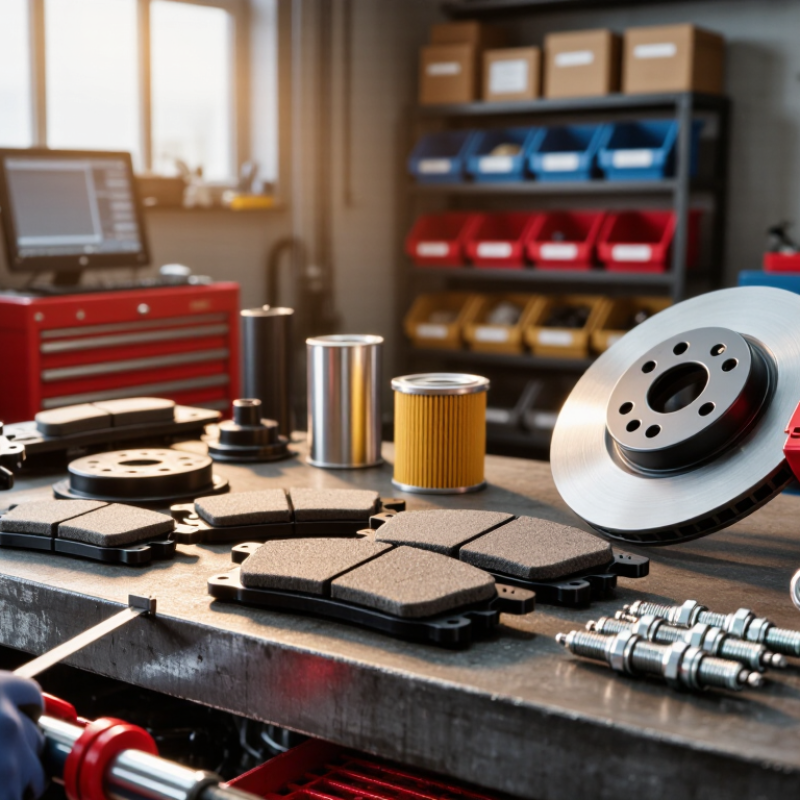
High-quality China automotive spare parts begin with accurate fitment, stable materials, and controlled production. A part may look polished, yet hidden weaknesses can appear after weeks of vibration, heat, and road dust. Fit matters. Dimensions should match the vehicle’s specifications, including mounting holes, threads, seals, and electrical connections.
From practical sourcing experience, reliable suppliers provide batch numbers, material details, inspection records, and clear installation guidance. They should test critical parts under realistic conditions, not only during visual checks. For example, a suspension component needs strength testing, corrosion checks, and repeated-load evaluation. Rubber seals should remain flexible after exposure to temperature changes. Independent inspection can also verify measurements before shipment.
Traceability builds trust. Each production batch should connect to raw materials, inspection results, and corrective actions. Recognized quality-management procedures help, but paperwork alone proves little. I have seen attractive samples fail because their later batches used inconsistent materials. That mistake is easy to overlook. Buyers should compare samples with delivered goods and request test evidence for safety-related components. Measure twice. Ask specific questions. A dependable manufacturer accepts reasonable scrutiny and explains limitations honestly, instead of promising perfect performance.
| Quality Dimension | Relevant Parts | Measurable Quality Indicator | Technical Reference or Typical Value | Why It Matters |
|---|---|---|---|---|
| Dimensional Accuracy | Engine, suspension, braking and transmission components | Measured dimensions, geometric tolerances and fitment results must match the approved engineering drawing. | ISO 2768-1 may be used for general tolerances when specifically referenced; for a nominal dimension of 30–120 mm, tolerance class “m” is typically ±0.3 mm. | Accurate dimensions support direct installation, correct alignment and reliable system operation. |
| Material Composition | Fasteners, gears, shafts, brake components and structural parts | Chemical composition is verified using material certificates or positive material identification testing. | The tested composition should comply with the specified steel, aluminium or alloy grade; material certificates should be traceable to the production batch. | Correct material selection affects strength, wear resistance, heat performance and corrosion resistance. |
| Mechanical Strength | Wheel bolts, suspension fasteners, brackets and load-bearing components | Tensile strength, yield strength and elongation are checked against the required material or fastener class. | For ISO 898-1 property class 10.9 fasteners, the minimum tensile strength is 1,040 MPa and the minimum nominal yield strength is 940 MPa. | Adequate strength reduces the risk of fracture, thread failure and deformation under load. |
| Hardness and Wear Resistance | Bearing races, gears, cam components and hardened shafts | Rockwell hardness, case depth and hardness uniformity are measured at defined locations. | Through-hardened bearing steel components commonly use a hardness range of approximately 58–64 HRC, subject to the approved part specification. | Proper hardness helps parts resist pitting, deformation, scoring and premature wear. |
| Surface Finish and Sealing | Gaskets, oil seals, hydraulic parts and machined mating surfaces | Surface roughness, flatness, burr removal and sealing-surface cleanliness are inspected. | A surface roughness value such as Ra ≤1.6 µm is commonly specified for certain precision sealing surfaces, but the drawing remains the controlling requirement. | Controlled surfaces reduce leakage, friction, noise and uneven contact. |
| Thermal and Pressure Performance | Radiators, hoses, thermostats, seals and engine components | Parts are evaluated for operating temperature, pressure resistance, thermal cycling and leakage. | Testing should cover the vehicle-specific operating range; coolant and fuel-system components must be tested with compatible fluids and temperatures. | Stable performance under heat and pressure prevents leaks, deformation and sudden failure. |
| Corrosion Protection | Brake hardware, chassis parts, fasteners and electrical housings | Coating thickness, adhesion, appearance and corrosion resistance are tested after controlled exposure. | ISO 9227 defines neutral salt-spray test procedures; the required exposure duration and corrosion acceptance criteria must be specified for each part. | Effective protection preserves function, appearance and service life in humid or salted environments. |
| Rubber and Polymer Durability | O-rings, hoses, boots, bushings and vibration isolators | Hardness, tensile strength, elongation, compression set and resistance to oil, coolant or ozone are evaluated. | ASTM D395 is commonly used for compression-set testing of rubber; the allowable result depends on the rubber compound and application. | Suitable compounds maintain elasticity, sealing force and dimensional stability over time. |
| Functional and Endurance Testing | Braking, steering, suspension, electrical and engine components | Prototype and production samples undergo performance, vibration, fatigue, noise and life-cycle testing. | Acceptance limits should be based on the vehicle application, approved test plan and applicable national or international standard. | Laboratory inspection alone cannot confirm how a part performs during real operating cycles. |
| Traceability and Quality Control | All automotive spare parts | Each production batch should be linked to raw materials, process records, inspection results and packaging labels. | A documented quality system should include incoming inspection, in-process control, final inspection, nonconformance handling and corrective action. | Traceability makes defects easier to identify, contain and correct before they affect vehicle safety. |
| Packaging and Storage Protection | Precision metal parts, rubber parts, sensors and electronic components | Packaging should prevent impact, moisture, contamination, electrostatic damage and deformation during transport and storage. | Packaging requirements should reflect the part’s sensitivity, storage temperature, humidity exposure and transportation conditions. | A correctly manufactured part can still fail if it is damaged or degraded before installation. |