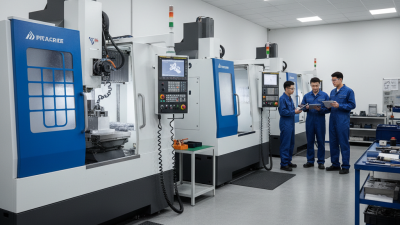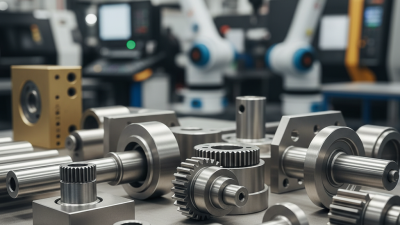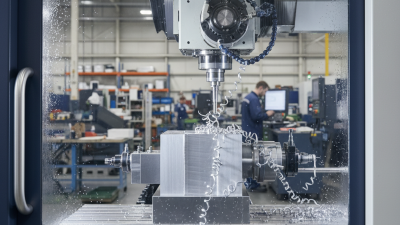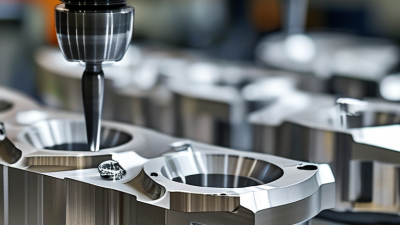
Choosing the 2026 Best CNC Processing Center for global buyers requires more than comparing spindle speed or catalog prices. A reliable decision connects machine capability with production goals, operator skill, service access, and long-term operating cost. A powerful CNC Processing Center may still disappoint if replacement parts take months to arrive.
Professor Yoram Koren, a leading authority on manufacturing systems, stated, “The objective of the reconfigurable manufacturing system is to provide exactly the functionality and capacity needed, exactly when needed.” This principle remains highly practical for international buyers. The right machine should handle today’s aluminum housings, steel brackets, or complex aerospace components without creating unnecessary investment.
Look beyond impressive specifications. Examine positioning accuracy, thermal stability, tool-change time, worktable size, controller usability, and chip evacuation. Ask for test-cut results using material similar to your own. Small details matter. A machine that holds stable accuracy after eight hours can protect margins better than one with a faster brochure rating.
Global purchasing also demands careful verification. Review installation requirements, voltage compatibility, training arrangements, warranty terms, and local technical support. Confirm whether the supplier can provide documented inspection reports and responsive remote diagnostics. These checks are not exciting, but they prevent expensive surprises.
There is no universal winner. A compact three-axis model may suit a workshop producing repeat components, while a five-axis CNC Processing Center may justify its cost for complex, low-volume parts. This guide compares leading options through a practical lens, while acknowledging one uncomfortable truth: published performance data does not always reflect factory-floor reality. Reliable buyers test, question, and reconsider before signing.
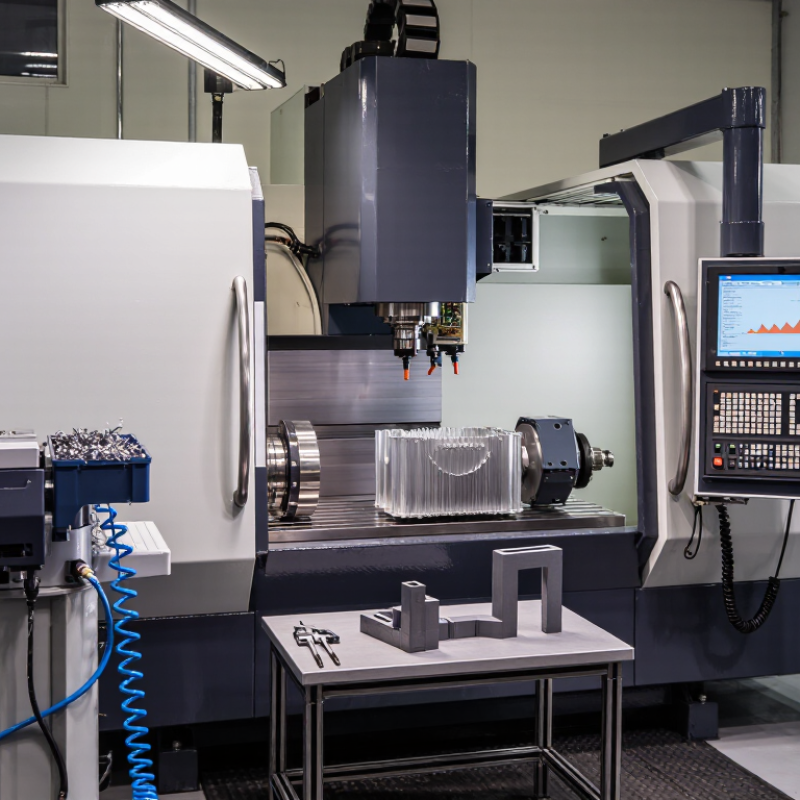
A CNC processing center is a computer-controlled machine that cuts, drills, mills, and shapes solid material. It usually combines several operations in one rigid workspace. The machine follows programmed tool paths from CAD/CAM software. Unlike a basic milling machine, it can change tools automatically and repeat complex movements with consistent accuracy. Common models use three, four, or five controlled axes. More axes can reduce repositioning, but they also increase programming and maintenance demands.
In a real workshop, the spindle, table, and workholding system affect results as much as software. A steel block may need strong clamping, steady coolant flow, and careful chip removal. Aluminum often allows faster cutting, yet sharp tools remain essential. Operators check tool wear, surface finish, vibration, and dimensional reports during production. A small alignment error can become a serious problem across hundreds of parts. It happens.
For global buyers, machine selection should match material, part size, tolerance, production volume, and local power standards. Ask for cutting tests using similar material and drawings. Review positioning accuracy, repeatability, controller functions, service response, training, and spare-part availability. Documentation should clearly state testing methods and acceptance conditions. A low purchase price may hide installation costs or difficult maintenance. The largest model is not always the best choice. Sometimes, a simpler center delivers better uptime and easier operator control. Even experienced teams can misjudge workload, especially when future orders are uncertain. That assumption deserves review before purchase.
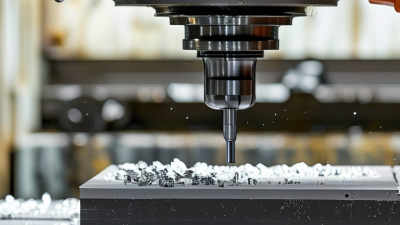
Typical mid-range specifications by CNC machining-center configuration
A CNC processing center is a computer-controlled machine tool that performs operations such as milling, drilling, tapping and reaming. The comparison shows representative mid-range specifications commonly used for buyer evaluation; actual values vary by machine size, application and configuration. Spindle speed indicates cutting-tool rotation capability, while tool capacity shows the number of tools available for automatic tool changes.
In 2026, the best CNC processing center is defined by control, stability, and measurable efficiency. During shop-floor evaluations, I look beyond cutting speed. A rigid structure reduces vibration during deep cavity work. High-speed spindles improve aluminum machining, while balanced torque supports steel and titanium operations. Five-axis interpolation can reduce setups and improve access to complex surfaces. However, more axes do not automatically create better parts.
Thermal compensation is becoming essential for reliable accuracy. Built-in sensors monitor spindle growth, guideway temperature, and ambient changes. The control system can adjust tool paths before errors become visible. Probing systems also verify workpiece position and tool condition inside the machine. Network connectivity helps engineers review alarms, cycle times, and maintenance data remotely. Some digital monitoring systems look impressive, but their data can be incomplete. I would test the reports against actual inspection results.
Tips: Ask for repeatability data from real production conditions. Check how quickly operators can recover from tool breakage. Confirm that probing, coolant control, and chip removal match your materials. Test the interface with ordinary operators, not only specialists. A short trial cut often reveals more than a polished presentation. Also, calculate energy use per finished part. The cheapest purchase price may not deliver the lowest operating cost. Don’t ignore training time. It is easy to underestimate.
Comparing CNC processing center specifications begins with the part, not the brochure. Record the largest workpiece, cutting material, tolerances, and planned batch size. Then match axis travel and table load to those facts. A machine with generous travel may waste floor space. A compact table may limit fixture access. Check usable travel under the spindle, not only the advertised figure. This detail is easy to miss.
Spindle data needs more than maximum rpm. Review rated power, continuous torque, taper size, and speed range. Aluminum may favor high speed, while steel often needs torque at lower rpm. Confirm acceleration, positioning accuracy, and repeatability under documented test conditions. They are different measurements. Ask how thermal growth is controlled during an eight-hour shift. Review tool capacity, change time, chip evacuation, coolant filtration, and enclosure access. A crowded tool magazine can slow real production.
For global buyers, compare electrical requirements, language options, safety certification, installation support, and spare-part lead times. Request a sample cutting test using your material and tooling. Measure cycle time, surface finish, dimensional drift, and noise. Service quality matters after delivery. It is often underestimated. Examine the controller interface with an operator, not only a technical salesperson. A clear screen can reduce training errors. Do not select the highest specification by default. The machine should fit your process, floor, operators, and maintenance skills. The difficult question is whether quoted performance remains stable in daily production.
2026 Best CNC Processing Center for Global Buyers?
Best CNC Processing Center Types for Global Buyers
For global buyers, the right CNC processing center depends on part shape, production volume, and available floor space. A vertical machining center suits brackets, molds, plates, and general precision work. Its front access simplifies loading, inspection, and routine maintenance. It also works well for smaller workshops with limited budgets. Keep it practical.
A horizontal machining center handles deeper parts and repeated side machining more efficiently. Its pallet system can reduce idle time during loading. A five-axis center reaches complex surfaces with fewer setups, helping control alignment errors. Gantry centers fit large panels, frames, and heavy components. Turning-milling centers combine rotating and milling operations for parts requiring several features. Do not overbuy.
Selection should begin with drawings, tolerances, materials, and monthly workload. Ask about spindle torque, axis travel, tool capacity, coolant control, and electrical compatibility. Remote buyers should also check installation guidance, operator training, spare-part access, and service response time. These details often matter more than headline specifications. A machine may look powerful on paper but struggle with unstable foundations or poor chip evacuation. I would not pretend that one machine type wins every job. In actual evaluations, buyers sometimes choose five-axis equipment for simple work and later discover unused capacity. A lower-cost vertical center can be the wiser choice, although future product changes deserve careful review. For international purchasing, clear documentation and verifiable test-cut results provide stronger confidence than attractive promises.
| CNC Processing Center Type | Best Application | Typical Axes | Typical Work Envelope | Typical Spindle Range | Main Advantages | Global Buyer Considerations |
|---|---|---|---|---|---|---|
| Vertical Machining Center (VMC) | General-purpose prismatic parts, molds, fixtures, automotive components, and small-to-medium batch production | 3 axes; optional 4th or 5th axis | Approximately 500–2,000 mm in X, 350–800 mm in Y, and 400–800 mm in Z | 6,000–20,000 rpm; high-speed models may exceed 20,000 rpm | Versatile layout, comparatively simple operation, broad tooling availability, and generally lower purchase and installation cost | Best overall value Confirm table load, tool-holder standard, electrical requirements, coolant configuration, and remote service capability |
| Horizontal Machining Center (HMC) | High-volume production of box-shaped parts, housings, engine components, and parts requiring machining on multiple faces | 4 axes; 5-axis options available | Approximately 500–1,000 mm in X, 500–900 mm in Y, and 500–900 mm in Z | 4,000–15,000 rpm | Excellent chip evacuation, reduced workholding changes, and efficient multi-face machining with pallet systems | Requires more floor space and higher capital investment; evaluate pallet size, automatic pallet changer cycle time, and foundation requirements |
| 5-Axis Machining Center | Complex aerospace, medical, energy, impeller, turbine, die, and precision components with contoured surfaces | Simultaneous or indexed 5 axes | Commonly 300–1,000 mm in X, 300–800 mm in Y, and 300–800 mm in Z; rotary capacity varies by design | 8,000–24,000 rpm; application-specific options may be higher | Fewer setups, improved access to complex surfaces, shorter cutting tools, and better geometric continuity | Best for complex parts Budget for advanced CAM software, post-processors, operator training, probing, rotary-axis accuracy checks, and service support |
| Gantry-Type Machining Center | Large molds, aerospace structures, heavy equipment components, energy parts, and oversized workpieces | 3 axes; optional 4th or 5th axis | Approximately 2,000–10,000+ mm in X, 1,500–4,000 mm in Y, and 800–2,500 mm in Z | 3,000–12,000 rpm | Large capacity, high structural rigidity, long-axis travel, and suitability for large single-piece machining | Best for oversized parts Check transportation limits, workshop height, foundation design, thermal control, and local installation expertise |
| High-Speed Machining Center | Graphite electrodes, aluminum parts, precision molds, electronics components, and fine-detail work | 3 to 5 axes | Approximately 300–1,200 mm in X, 250–700 mm in Y, and 250–600 mm in Z | 18,000–60,000 rpm; specialized machines may use higher speeds | Fast material removal in suitable materials, fine surface finish, and efficient small-tool machining | Requires balanced tooling, effective spindle cooling, high-quality air supply, suitable dust extraction, and stable thermal conditions |
| Die-Sinking and Mold Machining Center | Injection molds, die-casting dies, stamping dies, and hardened-steel cavity finishing | 3 to 5 axes | Approximately 500–1,500 mm in X, 400–1,000 mm in Y, and 400–900 mm in Z | 8,000–30,000 rpm, depending on material and finishing requirements | High contouring accuracy, stable thermal behavior, smooth interpolation, and compatibility with mold-focused CAM workflows | Review volumetric accuracy, probing options, tool-length measurement, surface-finish capability, and acceptance-test standards |
| Mill-Turn Machining Center | Complex rotational parts requiring turning, milling, drilling, and off-center operations in one setup | Typically 4 to 9 controlled axes | Typical turning diameter of 300–800 mm and turning length of 500–1,500 mm | Turning spindle: approximately 2,000–6,000 rpm; milling spindle: approximately 6,000–15,000 rpm | Combines turning and milling, reduces handling and setup errors, and supports complete machining of complex components | Best for part consolidation Assess programming complexity, bar capacity, chuck system, live tooling, chip control, and post-processor availability |
Note: Specifications are representative industry ranges for comparison. Actual travel, spindle speed, load capacity, accuracy, automation options, and power requirements vary by machine configuration and application. Buyers should validate final specifications through a technical quotation, sample machining, and factory acceptance testing.
2026 Best CNC Processing Center for Global Buyers?
Global purchasing starts with compliance, not the machine brochure. Buyers should request material certificates, electrical test records, origin documents, and serial-number traceability. Requirements vary by destination and application. A compliance file should be reviewed by qualified local professionals before shipment.
The ISO Survey 2022 recorded more than 1.26 million ISO 9001 certificates worldwide. This figure shows quality systems matter, but certification alone proves little. Buyers should inspect calibration records, process controls, nonconformance reports, and acceptance-test results. Ask for sample reports with measurements, tolerances, and corrective actions. Small details reveal operational discipline.
Service planning is equally practical. The World Bank’s 2023 Logistics Performance Index evaluates customs, tracking, and delivery timeliness. These factors can delay installation, even when production is ready. Confirm spare-part availability, remote diagnostics, technician response times, software support, and training language. A written service-level agreement helps. Time zones still cause friction.
I would also compare total ownership cost, not only the purchase price. Include installation, tooling, energy use, maintenance, insurance, duties, and operator training. The checklist is not perfect. Real factory conditions can expose gaps. Before signing, buyers should test the machine with representative material and realistic cycle times. A short demonstration is not production evidence.