Choosing a Chinese supplier for Aluminum Parts takes more than comparing unit prices. The scale of the industry helps explain why. The U.S. Geological Survey’s Mineral Commodity Summaries 2025 estimates China produced about 43 million metric tons of primary aluminum in 2024, out of roughly 72 million worldwide. That figure describes metal production, not finished components. Still, it points to a deep industrial base, with access to casting, extrusion, machining, and surface-treatment capabilities.
The International Aluminium Institute’s work on the sector’s climate pathways also highlights a practical sourcing question: how manufacturers manage energy use and material efficiency. For buyers, supplier checks should reach beyond a website or product catalogue. Ask about alloy traceability, dimensional inspection, tooling ownership, lead times, and production capacity. A machined bracket may look simple, yet a small bore tolerance can determine whether it fits an assembly line. Details matter.
This guide examines leading Chinese manufacturers through capabilities, quality systems, export experience, and product focus. Company rankings can be useful, but they are never a substitute for matching a factory to a specific drawing and order volume. A supplier with impressive equipment may still be a poor fit. That is easy to overlook. We also consider what public information can—and cannot—prove, so readers can build a shortlist and verify claims before requesting samples or placing an order.
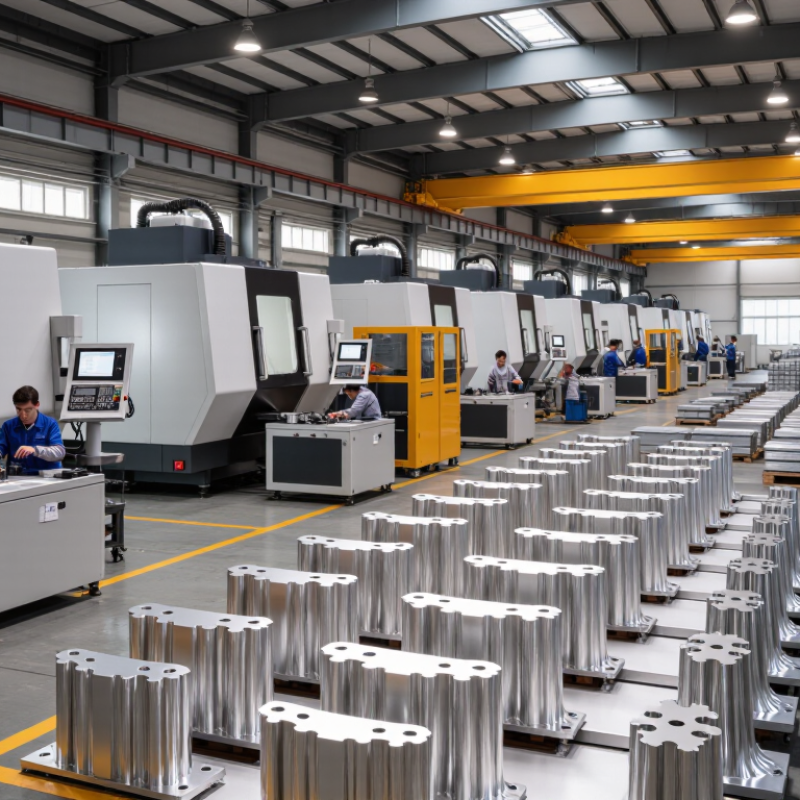
An aluminum parts manufacturer turns metal stock into components that meet a design’s dimensions, strength, and surface requirements. The work may begin with billet, sheet, or a casting. Processes include extrusion, die casting, forging, and CNC machining. A shop might cut a small bracket from billet, drill mounting holes, deburr sharp edges, and check the hole spacing with gauges. Small errors matter. The manufacturer also selects alloys and tempers, since these affect strength, corrosion resistance, machinability, and weight.
The sector operates at significant scale: the U.S. Geological Survey’s Mineral Commodity Summaries 2024 estimated 2023 global primary aluminum production at about 70 million metric tons. That figure describes newly produced metal, not finished parts, an important distinction when assessing capacity.
A reliable manufacturer should explain its process, material traceability, inspection methods, and tolerances—not just offer a low unit price. Ask how it controls distortion after machining and verifies critical dimensions. Details count. In practice, even a good process can leave variation; clear drawings, sample approvals, and documented checks help catch it before parts reach assembly.
Who Are the Top Aluminum Parts Manufacturers in China?
How China's Aluminum Parts Manufacturing Industry Is Organized
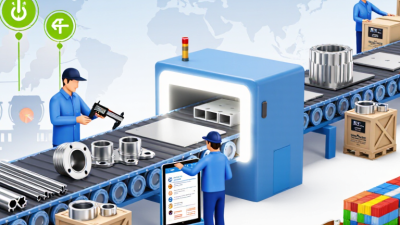
China’s aluminum parts industry is organized around specialized production stages rather than one standard factory model. Some plants focus on casting or extrusion, while others machine supplied material into precise components. A typical order may pass through several facilities before reaching final inspection.
The chain often begins with alloy selection and forming. Parts may be cast for complex shapes or extruded into profiles, then cut, drilled, milled, or turned to match engineering drawings. Surface treatments and assembly can follow. Small details matter: a misaligned hole or uneven coating may affect fit, appearance, or later assembly. Quite practical.
Many manufacturers serve as specialist suppliers to larger equipment makers, while some coordinate multiple processes under one roof. Buyers usually compare more than quoted prices. They review sample parts, measurement records, material traceability, production capacity, and communication about design changes. A supplier that explains its inspection method clearly can be easier to assess than one offering broad promises.
The structure is not perfectly tidy. Capabilities can overlap, and a factory’s website may not reveal which processes it performs in-house. Asking who controls each production step helps clarify responsibility. It also exposes a weak point: quality can become harder to track when several subcontractors handle one component.
Annual primary aluminum output, 2019–2023 (million metric tonnes)
China’s expanding primary aluminum output supplies the upstream material base for a diverse downstream industry, including extrusions, rolled products, castings, and machined parts. These figures show national production scale—not manufacturer rankings or parts output. Source: China National Bureau of Statistics; values rounded.
China’s leading aluminum-parts manufacturers are not defined by one product or production method. The strongest candidates combine stable casting or extrusion with precise machining, documented inspection, and dependable delivery. China’s National Bureau of Statistics recorded 41.59 million tonnes of primary aluminum output in 2023. International Aluminium Institute data put global output near 70.6 million tonnes that year, making China’s share about 59%. This scale supports a deep supply base, but it does not prove that every factory can make tight-tolerance parts. That distinction matters.
For buyers, sector leaders tend to show capability in measurable details: consistent wall thickness, controlled porosity in castings, and clean threads after machining. Ask for dimensional inspection records, material certificates, and sample parts from the actual production line. Check how the supplier handles rejected batches, tool wear, and changes to alloy specifications. A polished sample is not enough. Production consistency is harder.
Public data mainly tracks metal output, not the quality or market share of individual parts makers. That makes any simple ranking imperfect. A useful comparison weighs process fit, engineering support, traceability, and delivery performance against the part’s design. A supplier strong in large extrusions may not lead in small, complex die-cast housings. That caveat is easy to miss.
| Sector Indicator | Verified Industry Information | What It Means When Evaluating Manufacturers |
|---|---|---|
| China’s primary aluminum output | China produced approximately 41.6 million metric tonnes of primary aluminum in 2023, according to International Aluminium Institute data. | This indicates the scale of the country’s upstream aluminum industry. It is a national production figure, not a measure of finished parts output or an individual manufacturer’s capacity. |
| Common part-making processes | Aluminum parts are commonly made using extrusion, die casting, sand or permanent-mold casting, forging, sheet-metal forming, CNC machining, and fabrication. | Match the process to the part’s geometry, strength requirements, production volume, and finishing needs. A supplier’s capabilities should be confirmed for the specific process required. |
| Frequently specified alloys | Common wrought alloys include 5052, 6061, 6063, and 7075. Common casting alloys include A356/AlSi7Mg and ADC12/AlSi12Cu. | Alloy choice affects strength, corrosion resistance, formability, machinability, and cost. Confirm the exact alloy designation and applicable material certificate for each order. |
| Relevant Chinese standards | Examples include GB/T 3190 for wrought aluminum and aluminum alloy chemical composition, GB/T 3880 for aluminum and aluminum alloy plate, sheet, and strip, and GB/T 6892 for industrial aluminum and aluminum alloy extruded profiles. | Standards help define material or product requirements. Check the current edition and confirm that the standard covers the product form and specification in the quotation. |
| Quality checks to request | Typical checks may include dimensional inspection, alloy verification, mechanical-property testing, surface inspection, and—where relevant—porosity or pressure-leak testing. | Inspection plans should be agreed before production. The required tests depend on the part’s application, drawing, material, and acceptance criteria. |
| Finishing options | Common finishes include anodizing, powder coating, painting, polishing, and chemical conversion coating. | Specify the finish, color, thickness or appearance requirements, and inspection method. Compatibility depends on the alloy, product form, and intended use. |
| How to compare suppliers | Compare process capability, relevant equipment, material traceability, quality documentation, production capacity, lead time, and experience with comparable parts. | Request evidence such as process records, inspection reports, sample parts, and certifications where applicable. Do not infer a supplier’s quality or capacity from national output figures. |
This table summarizes sector-level information and evaluation criteria. It does not rank or identify individual companies; production volume for primary aluminum is not the same as production volume for aluminum parts.
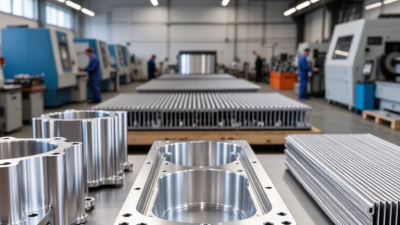
Chinese aluminum parts manufacturers offer more than standard extrusions. Typical products include window and machinery profiles, heat-sink sections, CNC-machined housings, die-cast brackets, stamped panels, and forged structural components. Their production capabilities may cover alloy selection, extrusion or casting, precision machining, heat treatment, anodizing, powder coating, and final assembly. Some suppliers also inspect dimensions with coordinate-measuring machines and verify surface finishes against customer drawings.
Scale is significant, but it is not a quality guarantee. The USGS Mineral Commodity Summaries 2024 estimates that China produced 41 million metric tons of primary aluminum in 2023. That figure describes upstream metal output, not finished-part capacity. Buyers should therefore check process-specific evidence: alloy and temper certificates, machining tolerances, coating thickness, and sample inspection records. Ask how a supplier controls distortion after heat treatment, too. It is a small question with real consequences. Some capability claims sound impressive, yet may refer to partner factories rather than in-house equipment. A clear process map helps reveal the difference.
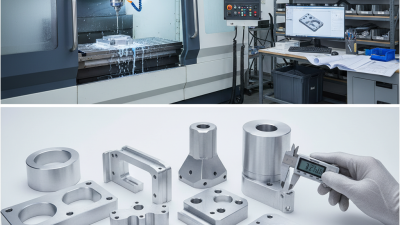
Comparing manufacturers starts with the part, not the lowest quote. Share a clear drawing, alloy and temper requirements, annual volume, and critical dimensions. Ask how each supplier checks flatness, hole position, and surface finish. A measurement report from a sample run can show whether stated tolerances are practical. If the drawing leaves a detail open, clarify it before production.
Review the proposed process, inspection plan, lead time, and packaging together. For machined parts, ask which features are checked during production and which are checked at final inspection. Compare quotes line by line: tooling, finishing, inspection, and freight can change the real cost. Request a sample and inspect it against the drawing. A spreadsheet helps, but it can still hide a weak assumption. Supplier capacity claims also deserve a specific follow-up question.
Tips: Send the same files and questions to every candidate. Keep one approved sample as a reference. Check that material records and inspection results match the order. Small gaps matter. A rushed comparison can miss them.